

Arjuna Extract
Arjuna Extract
WARM BROWN TANNINS
Shepherd Textiles Arjuna Extract is made from the bark of terminalia arjuna, a tropical hardwood tree native to South Asia. Arjuna bark is one of the most important tonics in the traditional Ayurvedic medicinal system, and in India it has been used for thousands of years to improve circulation, skin complexion, and general well-being. Arjuna bark also happens to be a rich source of condensed tannins that can be applied to textile fibers. Arjuna Extract works especially well in combination with iron, and can be used on cotton and linen for warm shades of brown, gray, and black. Use at 20% weight-of-fabric as a dye or tannin treatment. Product of India.
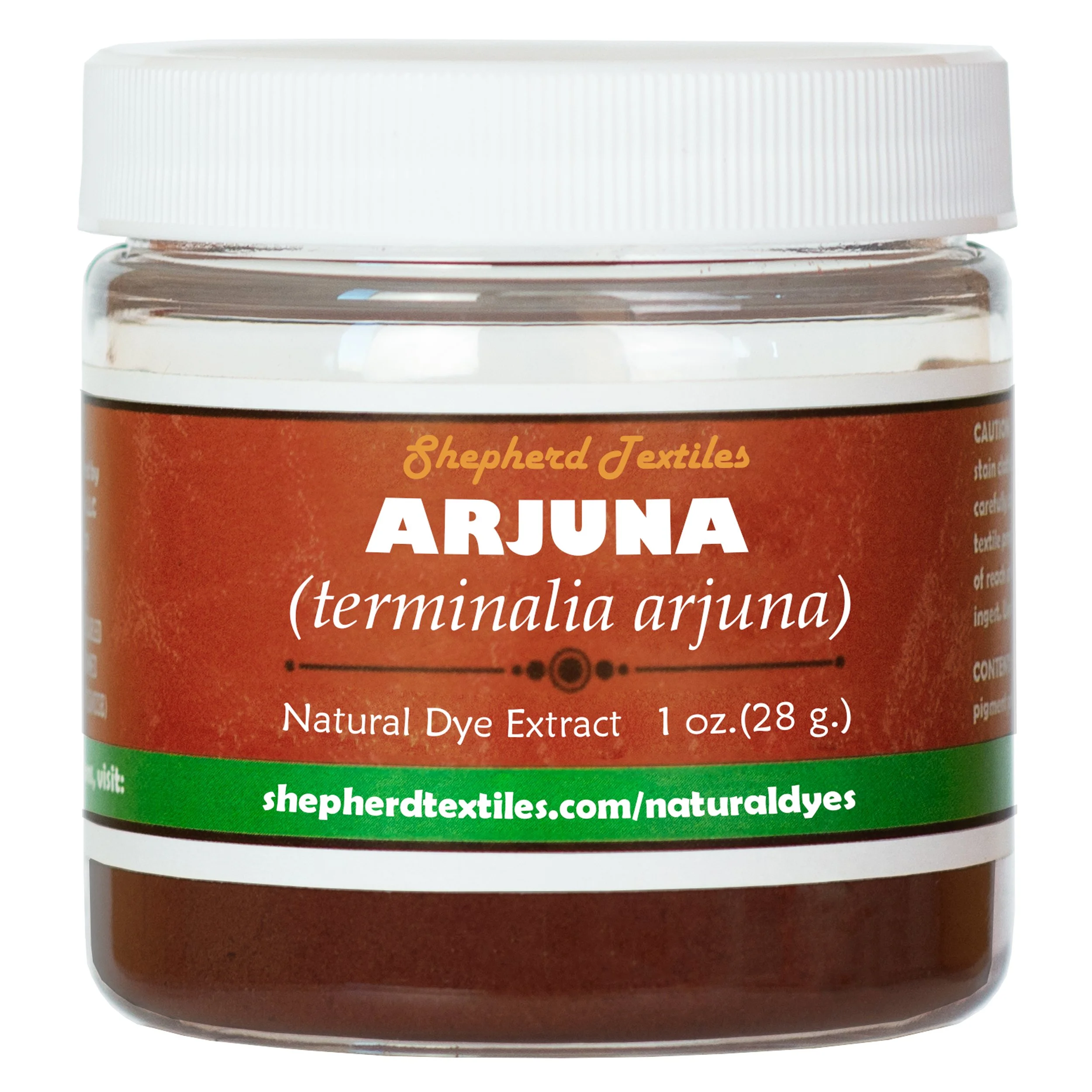
Shepherd Textiles Arjuna Extract is made from the bark of terminalia arjuna, a tropical hardwood tree native to South Asia. Arjuna bark is one of the most important tonics in the traditional Ayurvedic medicinal system, and in India it has been used for thousands of years to improve circulation, skin complexion, and general well-being. Arjuna bark also happens to be a rich source of condensed tannins that can be applied to textile fibers. Arjuna Extract works especially well in combination with iron, and can be used on cotton and linen fibers to get grays, browns, and blacks. Check out our guide to Dyeing with Arjuna Extract for background, color recipes, and important safety information. For textile projects only. Product of India.
1. Background on Arjuna Bark
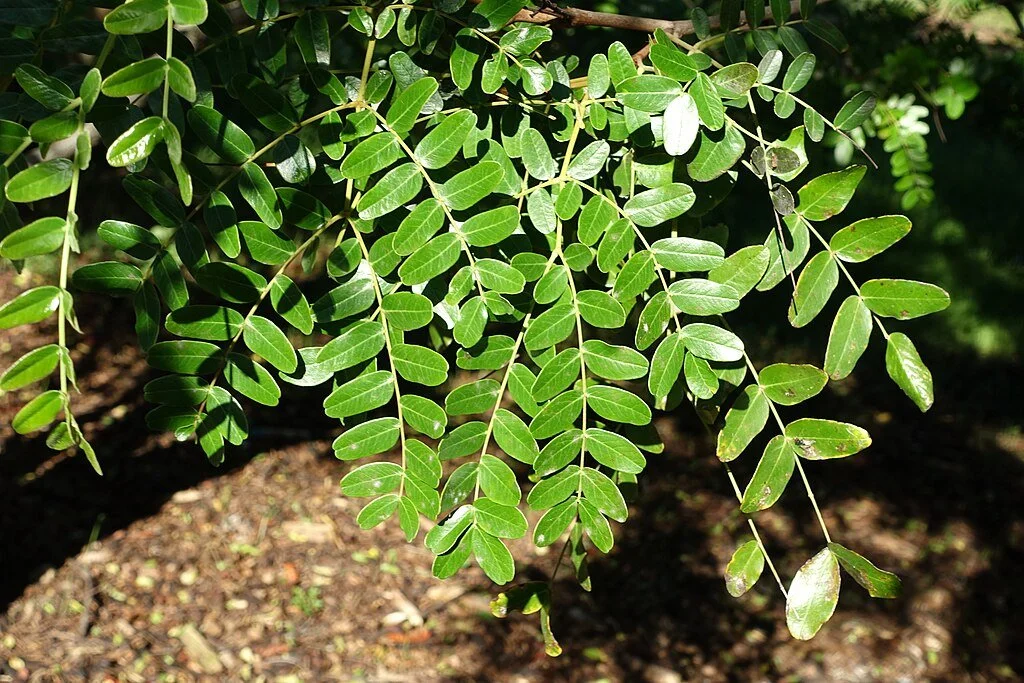
Arjuna tannins are derived from the bark of terminalia arjuna, a large deciduous tree native to the Indian subcontinent. Arjuna trees grow along riverbanks and in floodplains, with a range that stretches from the Himalayas in the north to Sri Lanka in the south. Arjuna bark has been harvested for millennia across South Asia for leather tanning and for traditional textile work. However, it is most valued by practitioners of the Ayurvedic medicinal system, which associates arjuna bark with heart and cardiovascular health. The raw bark is typically prepared as a decoction, or sometimes simmered in milk in a preparation known as arjuna kshirapaka, and used to support healthy circulation and overall vitality. It is also applied for topical wound healing and as an astringent to treat various forms of skin inflammation. Arjuna is a sustainable source of tannins, since the bark is typically harvested by cutting away strips rather than felling the whole tree, which allows the tree time to regenerate for later use.
Arjuna belongs to the same genus as myrobalan, another important souce of textile tannins. However, it behaves quite differently in the dye bath. Rather than the hydrolyzable tannins that predominate in myrobalan, arjuna bark is rich in condensed tannins, and behaves more similarly to cutch, quebracho, and gambir. It can be used as a substantive dye (without a mordant) for a soft beige shade, but it works best for fixing iron on cotton or linen fibers in order to produce warm shades of gray, or even black if overdyed with logwood. It can also successfully be applied to wool, especially in combination with an iron mordant. Arjuna is not quite as concentrated as some other condensed tannins like gambir, but it produces fine, clear colors and will be of interest to dyers who appreciate its sustainability, its connection with Ayurvedic principles, and its millenia of traditional use.
2. Safety Precautions
This product is intended for textile projects only.
Do not ingest.
Avoid eye contact. If eye contact occurs, rinse well with cool water.
Avoid direct skin contact. If skin contact occurs, rinse well with cool water.
Wear gloves, a mask, and eye protection while handling the dry pigment. Work in a well-ventilated space, and wash hands after use.
Not for use in food, cosmetics, soap, or hair care products.
Open carefully to avoid spilling or creating dust. If a spill occurs, quickly wipe up with a paper towel or disposable rag.
Arjuna Extract can permanently dye clothing, countertops, rugs, utensils, or other property. Avoid contact with anything not meant to be dyed.
Use only dye pots and utensils dedicated to dyeing. Do not use any pots, containers, spoons, tongs, thermometers, or other utensils that will be used for food preparation.
Metal mordants like ferrous sulfate are irritants and may be harmful if swallowed. Read your manufacturer’s safety data sheet (SDS) before use.
Arjuna Extract, and all dye baths and mordant liquors made while dyeing, should be kept out of reach of children and pets. Use only with adult supervision.
Shepherd Textiles, LLC is not liable for any misuse of this product or any unintended staining of your clothing, workspace, or other property. Use only as directed.
3. Recommended Supplies

Dye pot. Use a dye pot large enough to hold all your fibers, with plenty of room for them to move around and for the liquid to circulate freely. A stainless steel stock pot usually works well.
Metal tongs. A pair of tongs is useful for stirring and taking fabric out. Use tongs dedicated to dyeing, and not for food preparation.
Rubber gloves. Wear rubber gloves while handling mordanted/dyed fiber before it is rinsed.
Scale. Use a scale to weigh out fiber, mordant, and Arjuna Bark Extract.
Candy thermometer. A cheap candy thermometer that clips to the side of the dye pot will make it easier to track the temperature.
Iron mordant. The form of iron used as a mordant with Arjuna Extract is ferrous sulfate (sometimes labeled ferrous sulfate heptahydrate).
[Optional] Aluminum Formate Pro. An aluminum mordant that works especially well with plant fibers like cotton and linen.
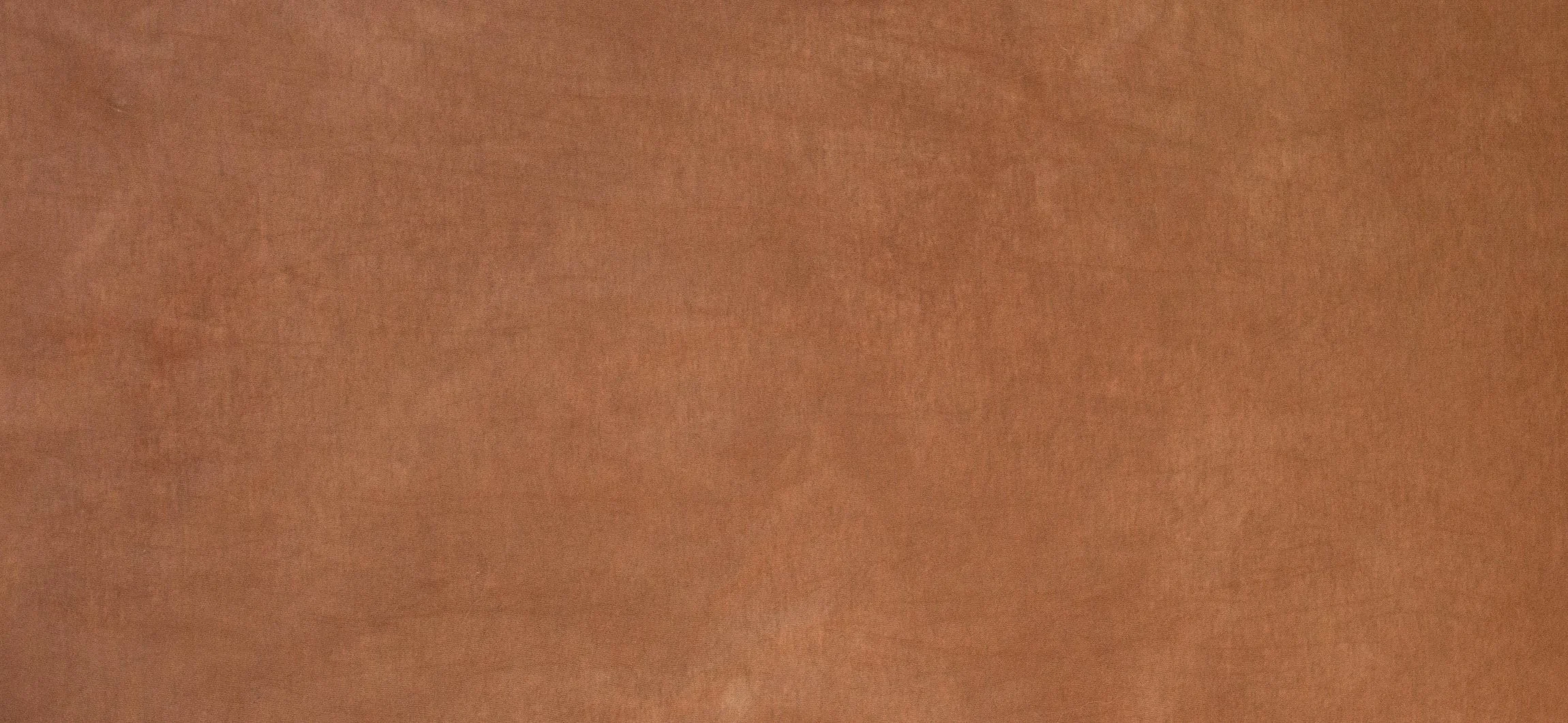
Recipes
4. Iron Gray on Cotton/Linen
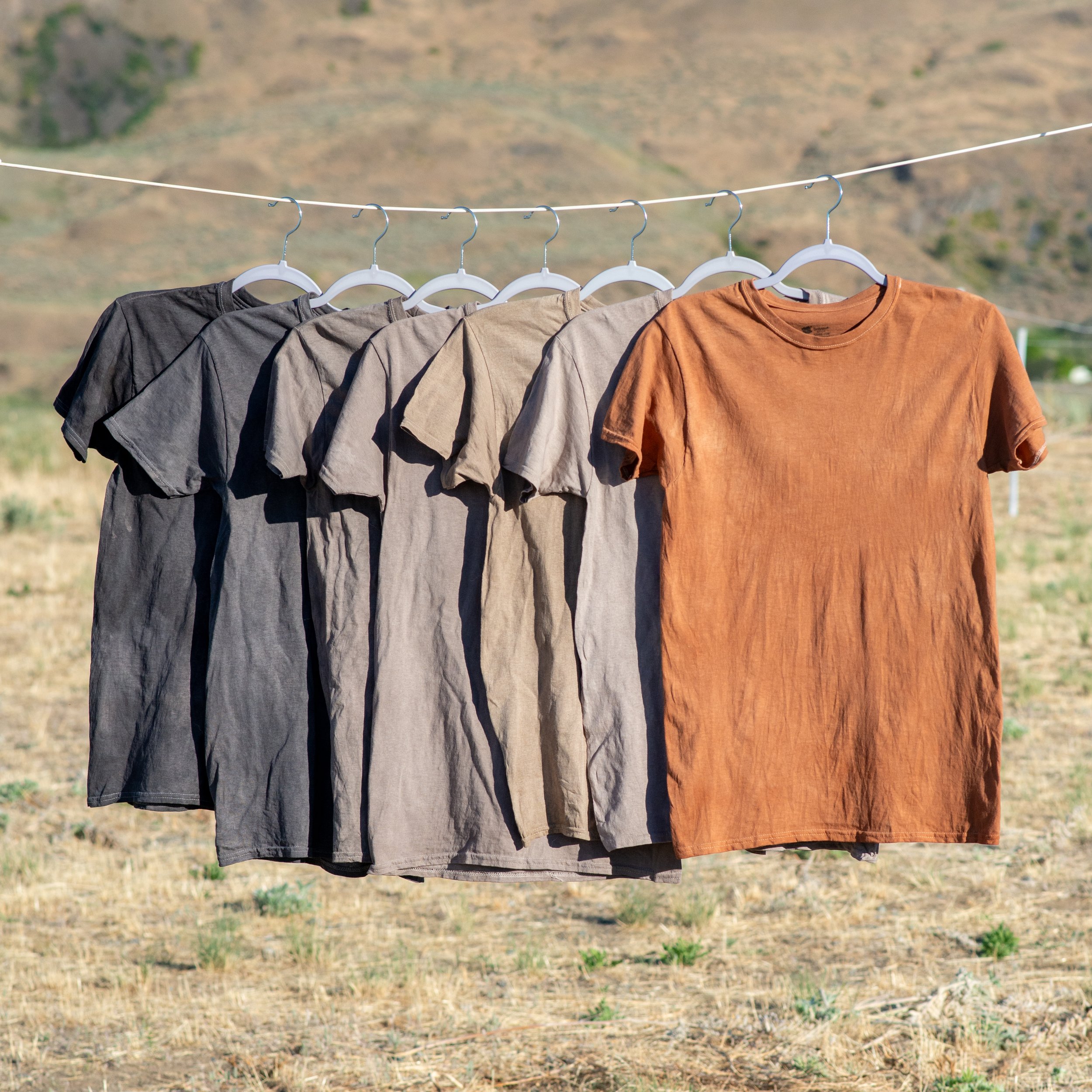
Arjuna Extract is a rich source of condensed tannins, very similar to the catechutannins that are found in cutch. Condensed tannins have a limited ability to fix aluminum mordants, but they make up for it by having a great affinity for iron. If cotton or linen fibers are soaked in a strong solution of Arjuna Extract, they can easily be “saddened” with ferrous sulfate to get various shades of warm gray. The fibers can, if you want, then be dyed with other dyes like logwood. One other quirk of condensed tannins is that they are sensitive to oxidation. Simmering the cotton or linen in the arjuna bath will give the darkest results, but the color will be uneven because the parts of the fiber that stick out of the bath will be more exposed to air and will darken more. Letting the fibers soak at a lower temperature (while completely submerged) will yield softer but more uniform results.
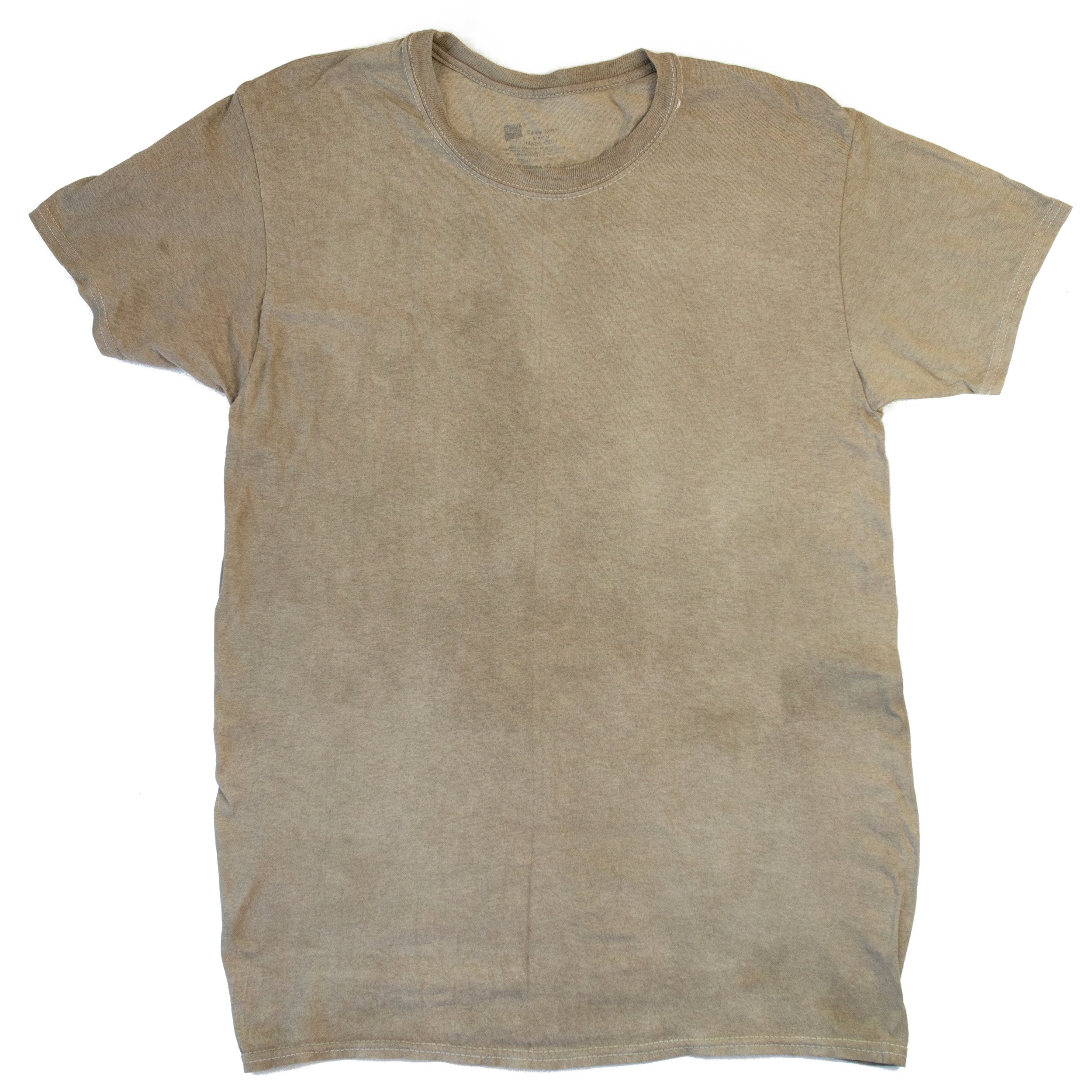
20% Arjuna Extract
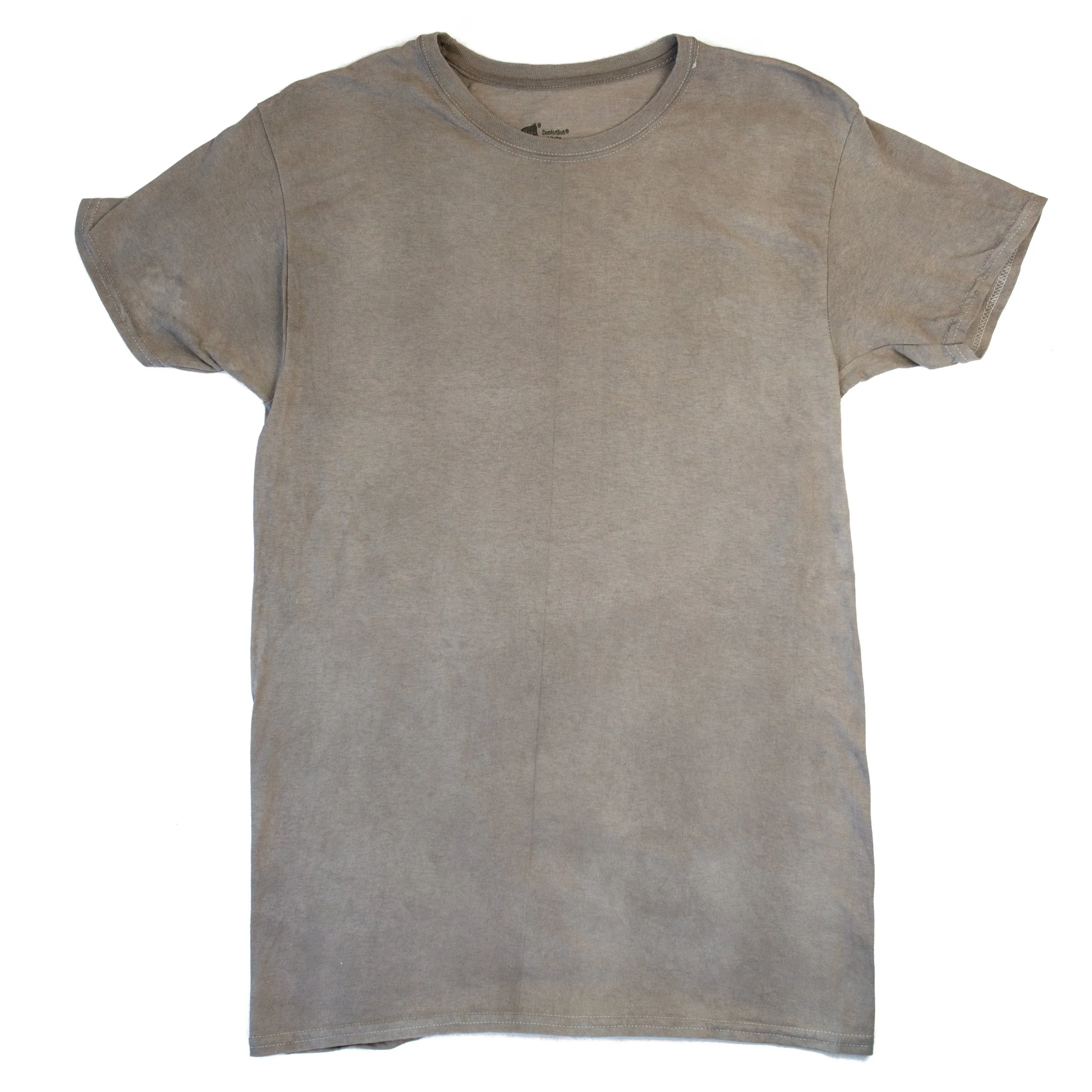
20% Arjuna Extract + 5% Iron
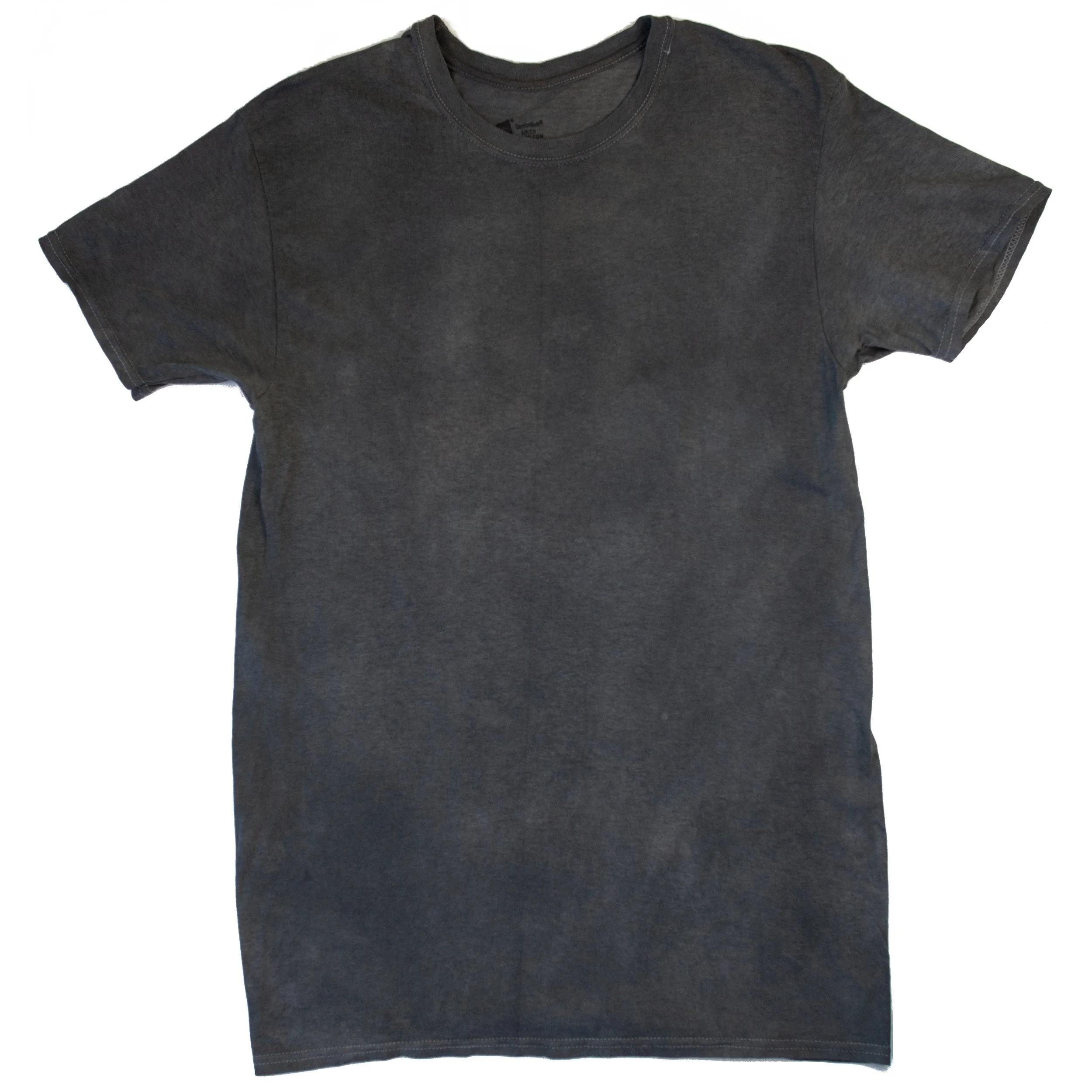
20% Arjuna + 5% Iron + 1% Royal Logwood
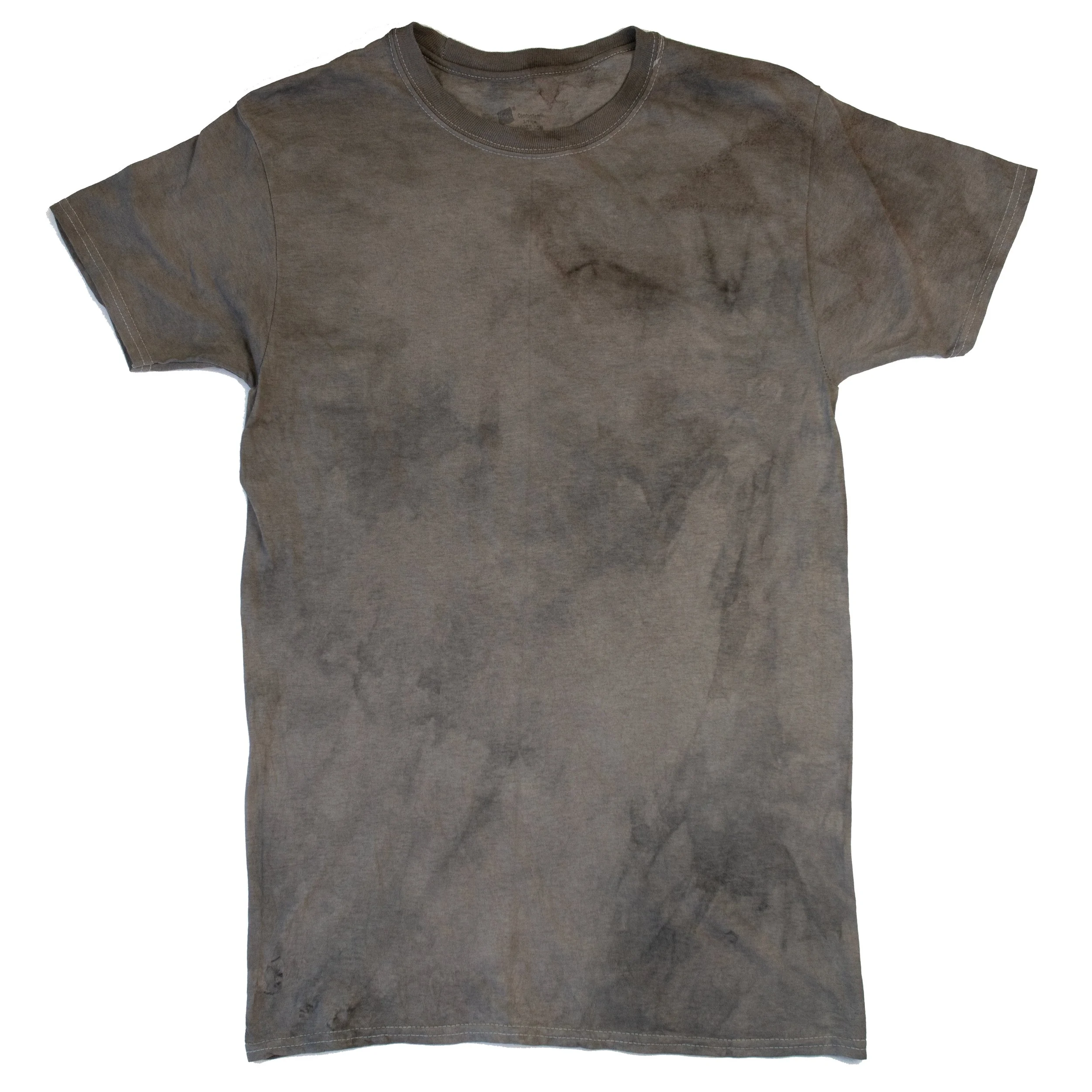
20% Arjuna Extract + 5% Iron
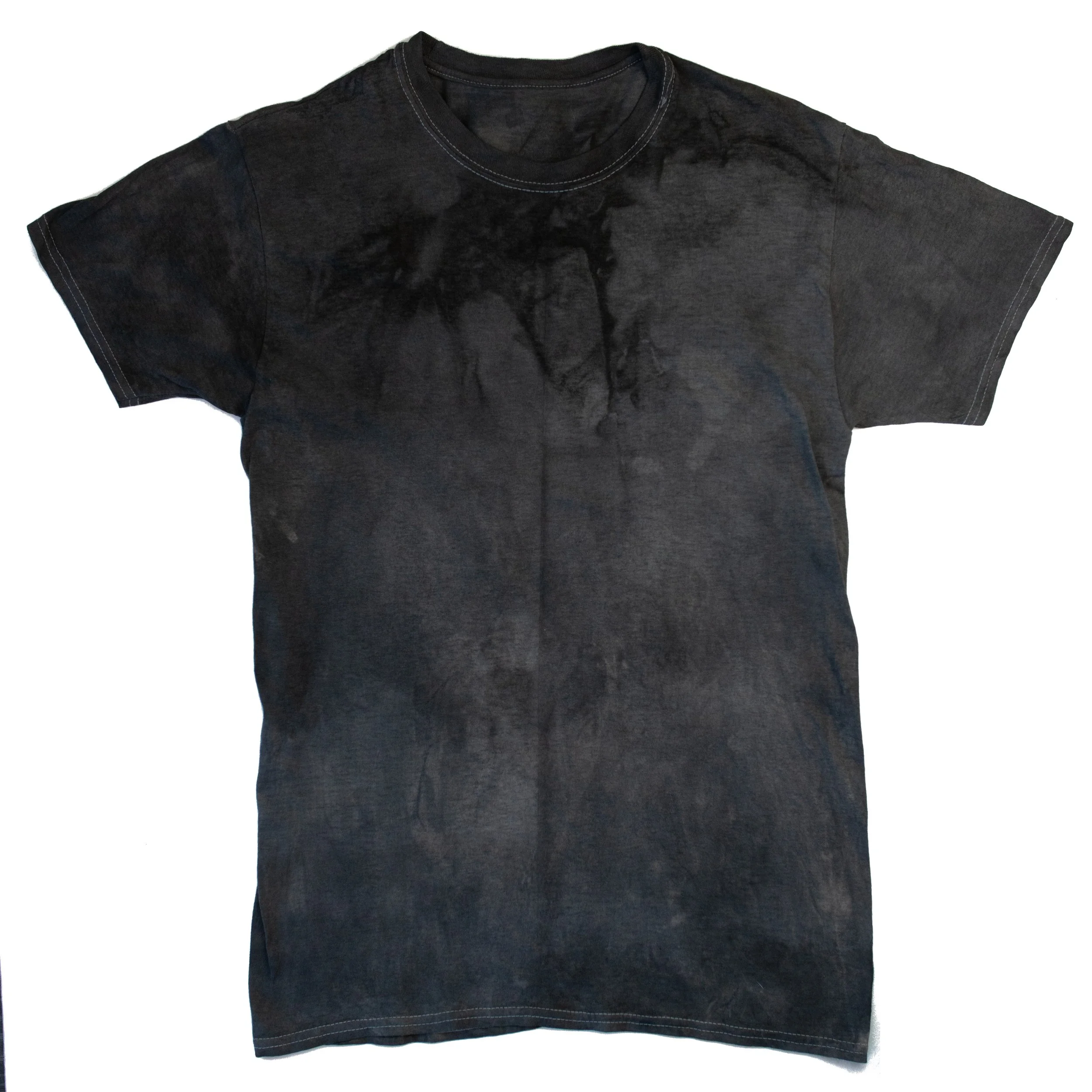
20% Arjuna + 5% Iron + 1% Royal Logwood
Scour (clean) the cotton or linen fibers well: Fill a dye pot with enough warm water for the fibers to move around freely. Add 1 gram of soda ash (sodium carbonate), plus 1 gram for each additional pound of fiber. Add the fibers and raise the heat to a very gentle simmer. Simmer the fibers for one hour, stirring occasionally. After an hour, remove from the heat. When cool enough to handle safely, rinse well with warm water until the water runs clear.
Fill a dye pot with enough hot water (around 120°F or 130°F) for your fibers to move around freely. Weigh out 20% weight-of-fabric (WOF) of Arjuna Extract, add to the water, and mix well until completely dissolved. Arjuna Extract can be a bit clumpy, but the powder should dissolve with enough stirring. Alternately, put the powder in a glass or plastic cup, add a little water, and mix it into a thick slurry before adding it to the dye pot.
Gently add the scoured cotton or linen to the arjuna bath. Wearing rubber gloves, arrange it so that all the fiber is submerged and no bubbles are trapped beneath.
At this point you have two options. You can (1) let the fibers steep in this arjuna bath overnight without applying heat. This will result in a softer but more uniform shade after mordanting. If you go this route, stir the fibers once or twice to make sure they absorb tannins evenly, but make sure afterwards that they are all submerged. The alternative is (2) to bring the arjuna bath to a gentle simmer at around 180°F or 190°F, and hold this temperature for an hour. Afterwards, remove the pot from the heat, cover it, and let the fibers steep overnight. As soon as the fibers are cool enough to handle safely, rearrange them so they are all submerged. Simmering the fibers will result in the darkest colors, but the color will likely turn out patchy and uneven because while the fibers were simmering, any parts that poked out of the water will have oxidized and darkened more than the parts that stayed submerged. This can be seen on the tshirt swatches above, where the uniform shirts were steeped without heat, but the patchy shirts were simmered.
When ready to proceed the next day, lift the fibers out of the arjuna bath and gently squeeze excess liquid out (just enough so that they are not dripping). Do not rinse them. The arjuna bath may be reused, although it may need to be topped off with more Arjuna Extract.
Fill a dye pot or plastic bucket with enough soft or distilled water for the fibers to move around freely. The water should be room temperature or slightly lukewarm, around 80-90°F (27-32°C).
Weigh out 5% weight-of-fabric (WOF) of ferrous sulfate. Add to the mordant bath and mix well until fully dissolved.
Gently add your arjuna-treated cotton or linen fibers to the mordant bath. They will instantly turn gray. Wearing rubber gloves, work the fibers in the liquid to make sure they are evenly saturated. Make sure they are completely submerged and no bubbles are trapped underneath.
Cover the pot or bucket and let the fibers steep for 2 hours. Stir the fibers a few times while they are steeping to make sure they mordant evenly. After 2 hours, the cotton or linen will be thoroughly mordanted with iron.
Wearing gloves, remove the cotton or linen from the mordant bath and rinse well until the water runs clear.
After the cotton or linen has been thoroughly rinsed, you can stop here with the gray-brown shade or you can dye the fibers with another natural dye (so long as it works well with iron). Using logwood to get black would be the most obvious choice, and historically condensed tannins were used precisely for this purpose. We have used 1% of Royal Logwood Extract as an example. Other dyes can also be applied, although note that the gray-brown shade on the fibers may be too strong for some softer colors to show through clearly.
5. Chestnut Brown on Cotton/Linen
Condensed tannins (such as those found in Arjuna Extract) do not fix aluminum onto plant fibers nearly so well as the hydrolyzed tannins found in sumac, oak galls, chestnut bark, and myrobalans. So, to dye Arjuna Extract with an aluminum mordant for this warm brown shade, it is best to fix the aluminum using a hydrolyzed tannin first. For this recipe we have used Chestnut Extract and Aluminum Formate Pro. Chestnut Extract will impart its own soft brown shade to the cotton or linen, so it makes a good complement to Arjuna Extract. However, any combination of fixing tannin and a suitable aluminum mordant could be used in their place to get a fine, warm brown.
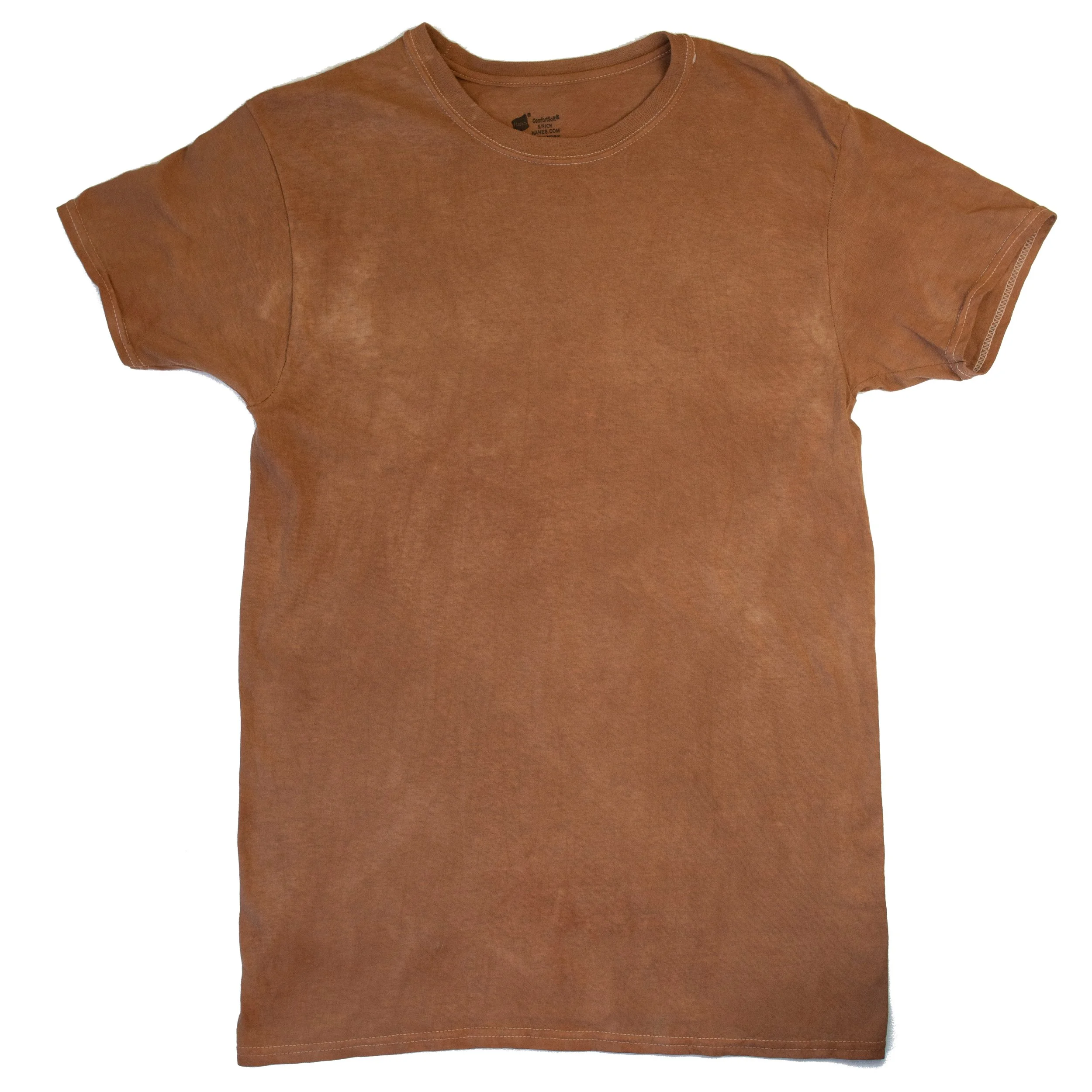
15% Chestnut Extract + 20% Arjuna Extract
Scour (clean) the cotton or linen fibers well: Fill a dye pot with enough warm water for the fibers to move around freely. Add 1 gram of soda ash (sodium carbonate), plus 1 gram for each additional pound of fiber. Add the fibers and raise the heat to a very gentle simmer. Simmer the fibers for one hour, stirring occasionally. After an hour, remove from the heat. When cool enough to handle safely, rinse well with warm water until the water runs clear.
Tan the fibers with Chestnut Extract: Fill a dye pot with enough hot water (around 120°F or 130°F) for your fibers to move around freely. Weigh out 15% weight-of-fabric (WOF) of Chestnut Extract, add to the water, and mix well until completely dissolved. Add the scoured fibers, then raise the heat to 180°F and maintain for one hour, stirring occasionally so the fibers absorb the tannin evenly. After one hour, remove the dye pot from the heat, cover, and allow the fibers to steep overnight. Before going to bed, make sure the fibers are completely submerged and no bubbles are trapped beneath them.
Mordant the fibers with Aluminum Formate Pro: The next day, fill a dye pot with enough room temperature water for the fibers to move around freely. Weigh out 10% weight-of-fabric of Aluminum Formate Pro, add to the pot, and mix well until fully dissolved. Wearing rubber gloves, remove the cotton or linen fibers from the chestnut tannin bath. Gently squeeze any excess liquid out, but do not wring them or rinse them. Place the fibers in the Aluminum Formate Pro bath, and work gently to make sure they are fully submerged. Steep the fibers in the mordant bath for 1 hour, stirring occasionally so that they mordant evenly. After 1 hour, remove the fibers from the mordant bath (wearing rubber gloves) and rinse well in warm water until the water runs clear. The fibers are now mordanted with aluminum, and ready to dye.
Dye with Arjuna Extract: Fill a dye pot with enough hot water (around 120°F or 130°F) for your fibers to move around freely. Weigh out 20% weight-of-fabric (WOF) of Arjuna Extract, add to the water, and mix well until completely dissolved. Arjuna Extract can be a bit clumpy, but the powder should dissolve with enough stirring. Alternately, put the powder in a glass or plastic cup, add a little water, and mix it into a thick slurry before adding it to the dye pot.
Gently add the aluminum-mordanted cotton or linen to the arjuna bath.
Gradually raise the heat to 180°F and hold this temperature for one hour. Stir regularly so that the fibers dye evenly. After one hour, turn off the heat and allow the fibers to cool down until safe to handle.
When the fibers are cool enough to handle safely, remove and rinse well in warm water until the water runs clear. If necessary, wash with a pH-neutral detergent like Synthrapol to remove any excess dye. Note that goods dyed with Arjuna Extract may bleed if not fully rinsed. Hang up to dry out of direct sunlight.
*All text and images are copyright of Shepherd Textiles, LLC. Do not reproduce without permission and attribution.