

Rustic Madder Extract
Rustic Madder Extract
A WARM TERRACOTTA PALETTE
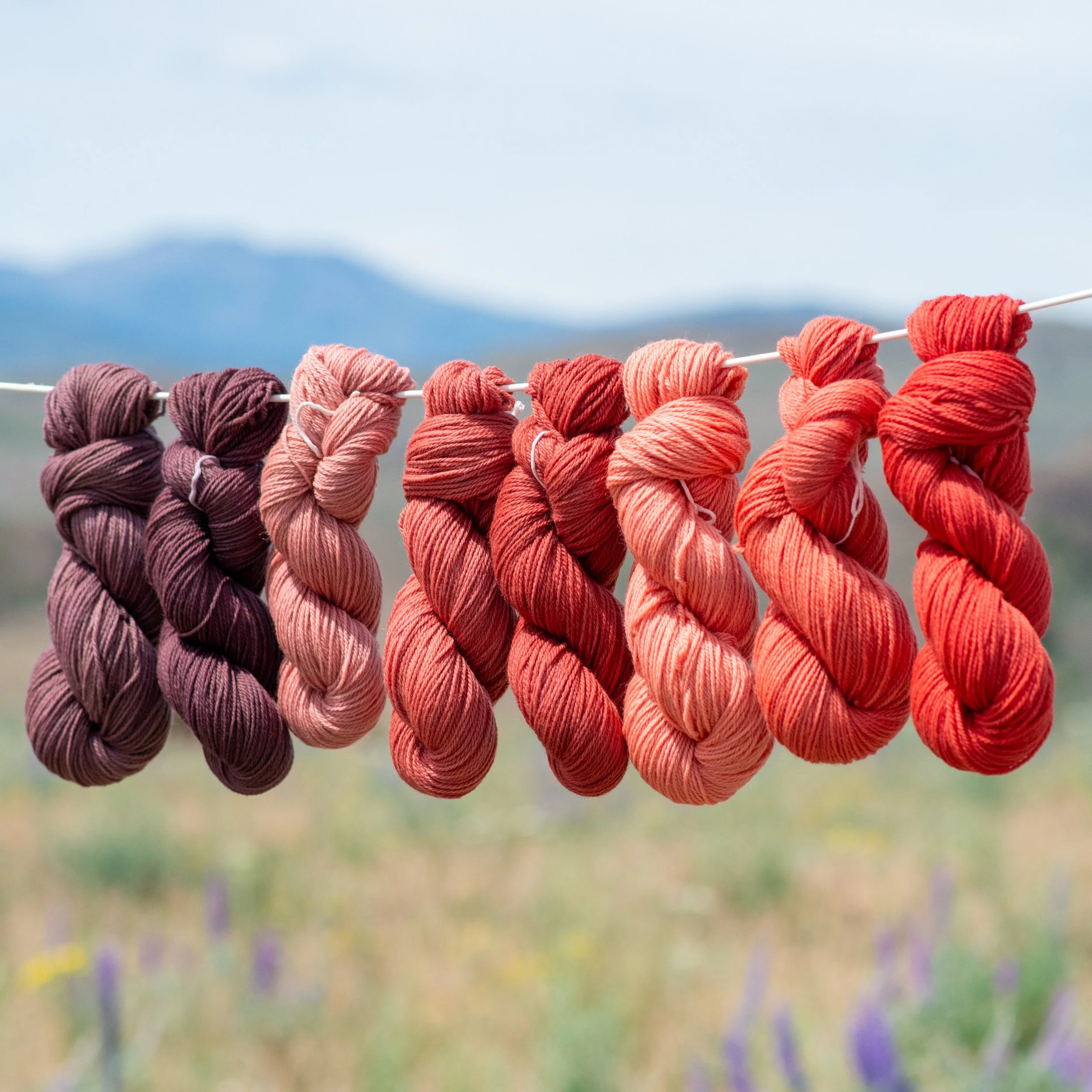
Shepherd Textiles Rustic Madder Extract is a full-spectrum root extract made from the roots of Turkish madder, rubia tinctorum. In contrast to our Wild Madder Extract (in which the red pigment alizarin predominates), Rustic Madder Extract contains a broad spectrum of natural red, orange, and yellow pigments like purpurin and munjistin. This complex chemical profile produces warm shades of brick red with orange undertones, as well as beautiful terracotta colors and even eggplant hues when used with iron. Rustic Madder Extract gives the best results on woolen fibers — for cotton and linen, we recommend using raw madder root instead. Use at 5-8% WOF for medium reds on wool.
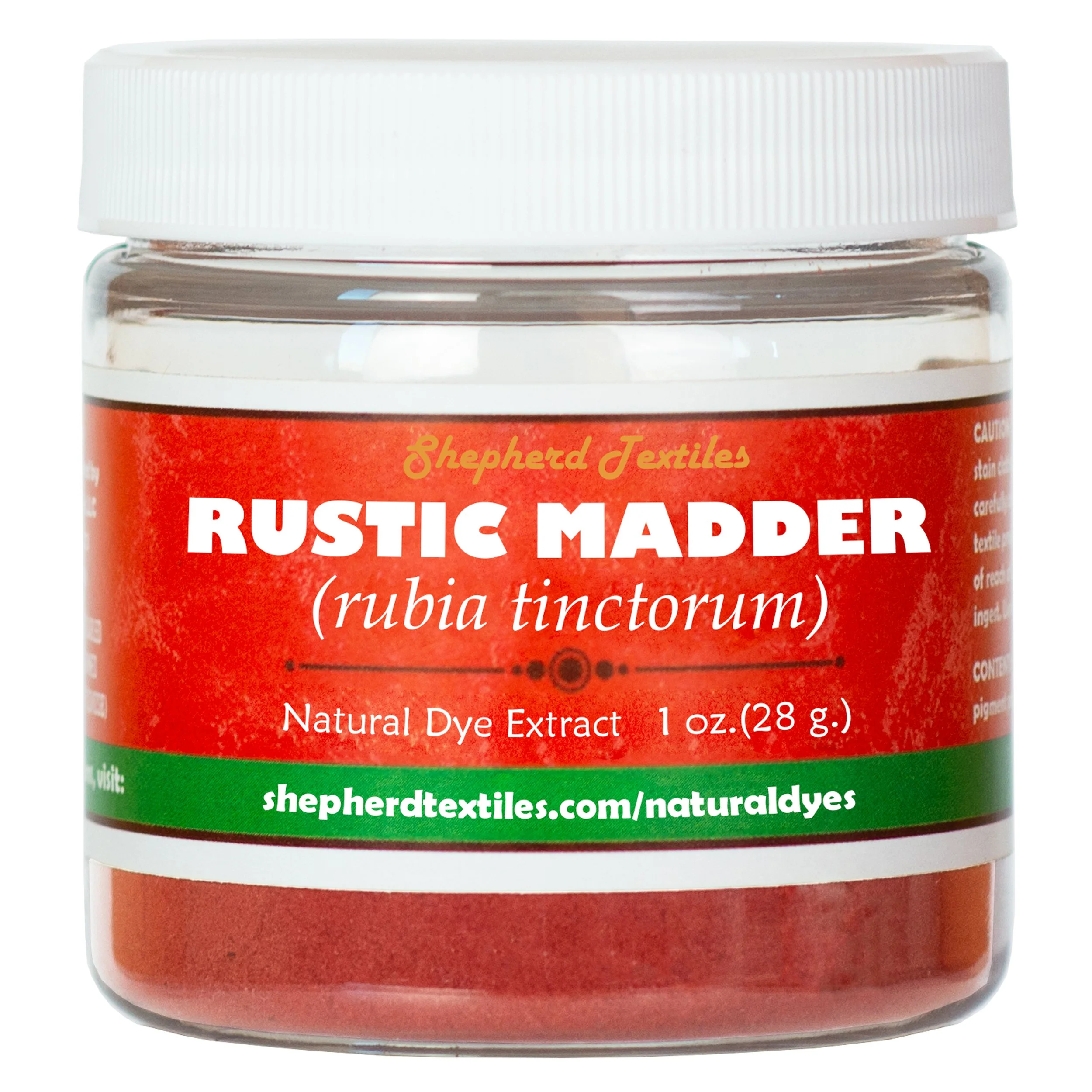
Shepherd Textiles Rustic Madder Extract is a full-spectrum root extract made from the roots of Turkish madder, rubia tinctorum. In contrast to our Wild Madder Extract (in which the red pigment alizarin predominates), Rustic Madder Extract contains a broad spectrum of natural red, orange, and brown pigments like ruberythic acid and munjistin. This complex chemical profile produces warm shades of brick red with orange undertones, as well as beautiful terracotta colors and even eggplant hues when used with iron. Rustic Madder Extract gives the best results on woolen fibers — for cotton and linen, we recommend using raw madder root instead. Use at 5-8% WOF for medium reds on wool. Please see our Guide to Dyeing with Rustic Madder Extract for background, color recipes, and important safety information.
1. Background on Madder

Madder root, rubia tinctorum, is one of the oldest and most important of all the natural dyes. Madder roots contain a variety of red, orange, and yellow pigments that together produce warm red shades that are very resistant to fading. Madder has been used since at least the days of ancient Egypt, when madder-dyed cloth was placed in Tutankhaman’s tomb. During the Early Modern era, dyers in the Ottoman Empire developed an extremely elaborate method for getting a clear crimson from madder root. This famous “Turkey red” color required a long process of repeatedly mordanting cotton with oil and aluminum, dyeing it, then using various physical and chemical treatments to flush out the orange and yellow pigments until only a clear red remained. This Turkey red color was in high demand for centuries. It was one of the pillars of the dyeing industry until 1869, when alizarin became the first natural pigment to be synthesized from coal tar, leading to a worldwide collapse of madder agriculture. Today, however, small producers in India, Turkey, and France are bringing high-quality natural madder root back to the market.
Shepherd Textiles offers two different madder extracts, Wild Madder Extract and Rustic Madder Extract. Both dyes are made from the same species of madder, rubia tinctorum, but they are extracted with different goals in mind. Wild Madder Extract concentrates the alizarin fraction of the root (the dominant red pigment) while leaving behind many of the orange and yellow pigments. Rustic Madder Extracts attempts to preserve the complete root profile by extracting all the various pigments, including precursor chemicals like ruberythic acid and pseudopurpurin. The majority of natural dyers will probably be better served by using our Wild Madder Extract, which gives a clearer crimson red shade with less fuss (it is less finicky about temperature, pH, and calcium). Rustic Madder Extract is a more specialized product for dyers and artists looking to take advantage of the orange and yellow pigments in the plant. In particular, we find that Rustic Madder Extract is excellent for producing a whole series of brown-red and terracotta shades (see recipe in Section 6) which are otherwise difficult to obtain.
Please note that Rustic Madder Extract gives excellent results on woolen fibers, and when used in the proportions described below the color tends to exhaust fully onto the fiber. However, we find that it gives poor results on plant fibers like cotton and linen. Mostly likely this is because it contains many pigments in their natural precursor form (for example, pseudopurpurin and ruberythic acid). These precursors have to be activated by heat and acid before they become usable pigments like purpurin and alizarin. The cream of tartar used to mordant and dye wool is sufficiently acidic to convert the precursors to pigments, but cotton and linen are basically neutral or alkaline by the time they get to the dye bath (especially after chalking) so the precursors never develop into their full pigment form. It might be possible to overcome this by simmering Rustic Madder Extract for an hour or two in a bath with cream of tartar or vinegar before adding cotton (to mirror what happens when the color is extracted from raw madder roots), but at that point we recommend that cotton and linen dyers simply use raw madder root instead.
2. Safety Precautions
This product is intended for textile projects only.
Do not ingest.
Avoid eye contact. If eye contact occurs, rinse well with cool water.
Avoid direct skin contact. If skin contact occurs, rinse well with cool water.
Wear gloves, a mask, and eye protection while handling the dry pigment. Work in a well-ventilated space, and wash hands after use.
Not for use in food, cosmetics, soap, or hair care products.
Open carefully to avoid spilling or creating dust. If a spill occurs, quickly wipe up with a paper towel or disposable rag.
Rustic Madder Extract can permanently dye clothing, countertops, rugs, utensils, or other property. Avoid contact with anything not meant to be dyed.
Use only dye pots and utensils dedicated to dyeing. Do not use any pots, containers, spoons, tongs, thermometers, or other utensils that will be used for food preparation.
Metal mordants like ferrous sulfate are irritants and may be harmful if swallowed. Read your manufacturer’s safety data sheet (SDS) before use.
Rustic Madder Extract, and all dye baths and mordant liquors made while dyeing, should be kept out of reach of children and pets. Use only with adult supervision.
Shepherd Textiles, LLC is not liable for any misuse of this product or any unintended staining of your clothing, workspace, or other property. Use only as directed.
3. Recommended Supplies

Dye pot. Use a stainless steel dye pot large enough to hold all your fibers, with plenty of room for them to move around and for the liquid to circulate freely. Rustic Madder Extract may leave faint stains on metal dye pots. If so, the stain can usually be scrubbed out with a scouring pad.
Metal tongs. A pair of tongs is useful for stirring and taking fabric out. Use tongs dedicated to dyeing, and not for food preparation.
Rubber gloves. Wear rubber gloves while handling extract powder and while handling mordanted/dyed fiber before it is rinsed.
Candy thermometer. Use a thermometer to keep track of the proper temperature during mordanting and dyeing.
Scale. Use a scale to weigh out fiber, mordant, and extract powder.
Alum or iron mordant. Madder is a mordant dye and a metal mordant is required for the best colors. Use alum or aluminum sulfate for reds, and iron mordant (ferrous sulfate) for purplish browns.
Calcium carbonate or calcium acetate. Madder in general requires calcium to develop a good red shade, and Rustic Madder Extract is especially thirsty for calcium. Unless your water is already extremely hard, you will need to supplement it by adding some calcium to the dye bath. Calcium acetate is generally the preferred form in this case because it dissolves completely and does not raise the pH of the bath very much, but calcium carbonate can also be used with good results.
Cream of tartar. Cream of tartar is required to properly mordant wool, and can also be used to slightly acidify the dye bath.
4. Preparation: Scouring & Mordanting
Madder is a mordant dye, which means that it only bonds effectively to textile fibers with the aid of a metal mordant like aluminum or iron. Mordanting is a complex topic and mordants can be applied to different fibers in a variety of different ways. The following instructions are for pre-mordanting woolen fibers with aluminum. Note that textile fibers should always be scoured (cleaned) well before mordanting and dyeing. If the fibers are not clean, the mordant may not be able to penetrate them evenly (leading to patchy colors) or the mordant may only superficially attach to the fibers, which will cause the color to rub off later.
For woolen fibers: Scour and mordant with 10% alum and 11% cream of tartar.
Weigh out the fibers you plan to dye (while they are dry). Multiply that weight by 0.1 to get the amount of alum you will need, and by 0.11 to get the correct amount of cream of tartar. For example, for a 100-gram skein of wool yarn, you will 10 grams of alum and 11 grams of cream of tartar.
Before mordanting, scour (clean) the fibers well. Fill a dye pot with enough warm water for the fibers to move around freely. Add 1 teaspoon of a pH-neutral detergent like Synthrapol per pound of wool (some dyers like to use Orvus Paste instead; refer to the manufacturer’s instructions for proper use). Add the woolen fibers and raise the heat to 160°F (70°C). Maintain this heat for one hour, stirring occasionally so the fibers scour evenly. After an hour, turn off the heat. When the fibers are cool enough to handle safely, remove them and rinse in several changes of warm water until the water runs clear. Be sure to handle woolen fibers carefully to avoid felting them. Do not wring them, and do not move them from hot water directly into cold water, because sudden temperature changes can encourage woolen fibers to felt.
When ready to begin mordanting, fill a dye pot with enough warm water for the fibers to move around freely.
Add the cream of tartar first, and mix well until dissolved. Add the alum next, and mix well until dissolved.
Gently place your wetted, scoured fibers into the mordant bath.
Gradually heat mordant bath to 180°F (82°C) over the course of about half an hour. Maintain the heat at 180°F for 1 hour, stirring occasionally to make sure the fibers mordant evenly. Keep a lid on the bath as much as possible, as any steam will be mildly acidic.
After 1 hour, turn off the heat and allow the mordant bath to cool. The fibers can be removed as soon as they are cool enough to safely handle, or they can be left to steep in the mordant bath until it has cooled down to room temperature (which will slightly increase the amount of mordant that is absorbed).
Remove the mordanted fibers and rinse well in two or three changes of lukewarm water. The fiber should not be washed with detergent, but excess mordant and cream of tartar should be rinsed out before dyeing.
Proceed directly to dyeing.
Dispose of mordant solution according to local guidelines.
Recipes
5. Brick Red on Woolens
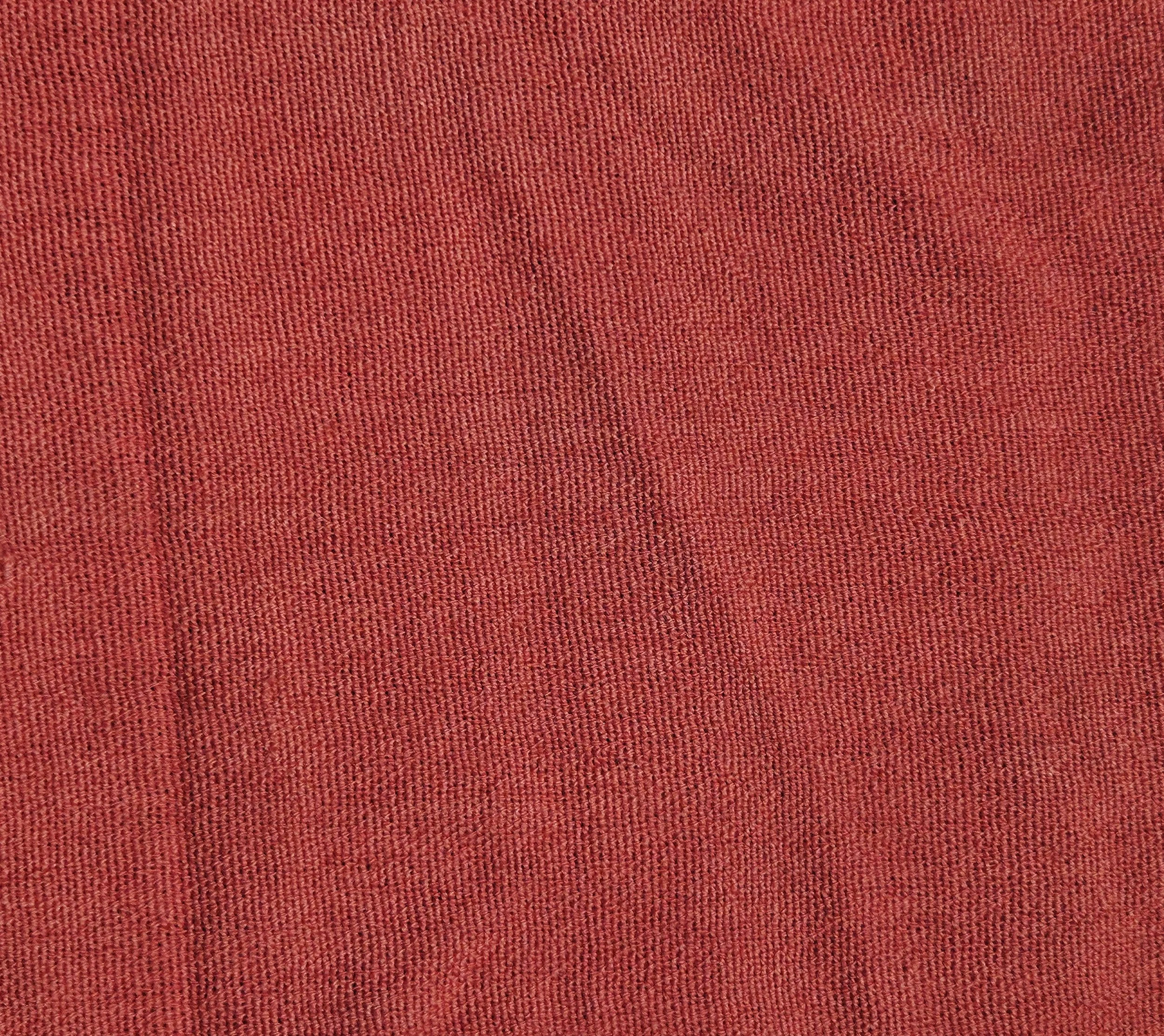
Madder root is best known for producing warm shades of red. The roots actually contain a variety of different red pigments including alizarin (which produces the clear crimson known as “Turkey red,”), purpurin (which gives an orangier shade of red), and munjistin (which likewise gives an orangey hue). Rustic Madder Extract preserves the natural color profile of raw madder root, which means it contains a large proportion of those orangey-red pigments. When dyed on alum-mordanted wool, it produces a warm brick red shade with an orange undertone. Smaller concentrations of dye can be used for pink and salmon shades. Care should be taken not to let the dye bath get hotter than 180°F, otherwise the color may become muddied.
Wool yarn, 2% WOF
Wool yarn, 5% WOF
Wool yarn, 8% WOF
Fill your dye pot with enough warm water for your fibers to move around freely.
[Optional] Add 1-2 grams of calcium acetate or calcium carbonate per gallon of water in the dye pot. Madder requires calcium in the bath to develop a good color, and Rustic Madder Extract is especially thirsty for calcium. If there is not enough calcium present, the reds and purples will not develop and the fiber will dye a yellow-brown shade. Most tap water does not contain sufficient calcium, so it will need to be supplemented with either calcium acetate or calcium carbonate. Calcium acetate is the preferred choice because it will not raise the pH of the dye bath as much as calcium carbonate, but either will give good results. This step is optional if you have extremely hard water, in which case the bath may already contain adequate calcium.
Weigh out the appropriate weight-of-fabric (WOF) of Rustic Madder Extract powder. Use 2% for a salmon shade, 5% for a light red, or 8% for a medium brick red. Add the powder to the dye bath and mix well until any clumps are dissolved.
[Optional] Adjust the pH to neutral or very slightly acidic (pH 6-7). Madder is fairly forgiving of different pH levels so this step is optional, but dyeing in a slightly acidic bath will improve dye uptake and color exhaustion. You will probably not need to adjust the pH unless you have extremely alkaline water, or unless you added a lot of calcium carbonate during Step 2. If your dye bath is very alkaline it will likely be a deep purple rather than a dark red. To mildly acidify the bath, add 1 gram of cream of tartar per gallon of water in the dye bath.
Add your wetted, alum mordanted wool to the dye bath.
Heat the dyebath to 180°F very gradually, over the course of about 30 minutes, stirring regularly so that the wool dyes evenly. Maintain this heat for 1 hour and continue to stir occasionally. After 1 hour, turn off the heat and allow to cool to room temperature.
When the wool is cool enough to handle safely, remove with tongs and rinse well in warm water until the water runs clear. Soap or detergent should not be necessary, because the color in the dye bath should have mostly exhausted onto the wool. However, if necessary, wash with a pH-neutral detergent like Synthrapol. Follow the manufacturer’s directions for best results. CAUTION: Rustic Madder Extract may bleed if not thoroughly rinsed.
Hang up to dry out of direct sunlight.
6. Terracotta on Woolens
Madder produces red with aluminum and purple with iron. In the past, professional dyers took advantage of this feature to produce a variety of intermediate shades by combining aluminum and iron mordants in different ratios. Depending on the proportion of aluminum to iron, it is possible to get brownish reds, rosewood hues, and all the way to ruddy purples. Some old dyeing texts say it is even possible to produce a true chocolate shade (although none of those books share the secret of what mordant ratio is used to get a chocolate). This recipe uses aluminum and iron in an 8:2 ratio to produce a pleasing reddish brown or terracotta shade on wool. This method is a good way to get brownish shades without using brown tannin dyes.
Wool yarn, 2% WOF
Wool yarn, 5% WOF
Wool yarn, 8% WOF
Prepare the woolen fibers by pre-mordanting them with a mix of alum and iron. Follow the directions for mordanting wool in Section 4, but instead of using 10% alum, use 8% alum and 2% iron (ferrous sulfate). The amount of cream of tartar remains the same at 11%. The mordanting process is otherwise exactly the same [see NOTE 1].
Fill your dye pot with enough warm water for your fibers to move around freely.
[Optional] Add 1-2 grams of calcium acetate or calcium carbonate per gallon of water in the dye pot. Madder requires calcium in the bath to develop a good color, and Rustic Madder Extract is especially thirsty for calcium. If there is not enough calcium present, the reds and purples will not develop and the fiber will dye a yellow-brown shade. Most tap water does not contain sufficient calcium, so it will need to be supplemented with either calcium acetate or calcium carbonate. Calcium acetate is the preferred choice because it will not raise the pH of the dye bath as much as calcium carbonate, but either will give good results. This step is optional if you have extremely hard water, in which case the bath may already contain adequate calcium.
Weigh out the appropriate weight-of-fabric (WOF) of Rustic Madder Extract powder. Use 2% for a pale terracotta shade, 5% for a light reddish brown, or 8% for a medium reddish brown. Add the powder to the dye bath and mix well until any clumps are dissolved.
[Optional] Adjust the pH to neutral or very slightly acidic (pH 6-7). Madder is fairly forgiving of different pH levels so this step is optional, but dyeing in a slightly acidic bath will improve dye uptake and color exhaustion. You will probably not need to adjust the pH unless you have extremely alkaline water, or unless you added a lot of calcium carbonate during Step 2. If your dye bath is very alkaline it will likely be a deep purple rather than a dark red. To mildly acidify the bath, add 1 gram of cream of tartar per gallon of water in the dye bath.
Add your wetted, alum-and-iron mordanted wool to the dye bath.
Heat the dyebath to 180°F very gradually, over the course of about 30 minutes, stirring regularly so that the wool dyes evenly. Maintain this heat for 1 hour and continue to stir occasionally. After 1 hour, turn off the heat and allow to cool to room temperature.
When the wool is cool enough to handle safely, remove with tongs and rinse well in warm water until the water runs clear. Soap or detergent should not be necessary, because the color in the dye bath should have mostly exhausted onto the wool. However, if necessary, wash with a pH-neutral detergent like Synthrapol. Follow the manufacturer’s directions for best results. CAUTION: Rustic Madder Extract may bleed if not thoroughly rinsed.
Hang up to dry out of direct sunlight.
NOTE 1: To get different shades of red, brown, and purple, you can vary the ratio of aluminum to iron. We have used a ratio of 8:2 here (8% alum to 2% iron) for a reddish brown, but you can adjust it however you like. Using more iron will give more purple-brown hues. However, if too much iron is used, the color will shift all the way purple. Several historical sources indicate that you can even get a chocolate brown using this method, although none of the sources share the exact ratio of aluminum to iron they used to get that color.
7. Rusty Purple on Woolens
The red pigments in madder shift toward purple in the presence of iron, and the orangier pigments turn more brown. So, when Rustic Madder Extract is dyed on iron-mordanted wool, the result is a rusty purple or purple-brown shade. This shade would probably look very nice next to other soft, earthy colors. If you want a true royal purple (without the brown undertones), you can use the same method but with a small amount of Wild Madder Extract instead.
Wool yarn, 5% WOF
Wool yarn, 8% WOF
Prepare the fibers by pre-mordanting them with iron instead of alum. Follow the directions for mordanting wool in Section 4, but instead of using 10% alum, use 6% iron (ferrous sulfate). The amount of cream of tartar remains the same at 11%. The mordanting process is otherwise exactly the same [see NOTE 1].
Fill your dye pot with enough warm water for your fibers to move around freely.
[Optional] Add 1-2 grams of calcium acetate or calcium carbonate per gallon of water in the dye pot. Madder requires calcium in the bath to develop a good color, and Rustic Madder Extract is especially thirsty for calcium. If there is not enough calcium present, the reds and purples will not develop and the fiber will dye a yellow-brown shade. Most tap water does not contain sufficient calcium, so it will need to be supplemented with either calcium acetate or calcium carbonate. Calcium acetate is the preferred choice because it will not raise the pH of the dye bath as much as calcium carbonate, but either will give good results. This step is optional if you have extremely hard water, in which case the bath may already contain adequate calcium.
Weigh out the appropriate weight-of-fabric (WOF) of Rustic Madder Extract powder. Use 5% for a light purplish brown, or 8% for a medium purplish brown. Add the powder to the dye bath and mix well until any clumps are dissolved.
[Optional] Adjust the pH to neutral or very slightly acidic (pH 6-7). Madder is fairly forgiving of different pH levels so this step is optional, but dyeing in a slightly acidic bath will improve dye uptake and color exhaustion. You will probably not need to adjust the pH unless you have extremely alkaline water, or unless you added a lot of calcium carbonate during Step 2. If your dye bath is very alkaline it will likely be a deep purple rather than a dark red. To mildly acidify the bath, add 1 gram of cream of tartar per gallon of water in the dye bath.
Add your wetted, iron mordanted wool to the dye bath.
Heat the dyebath to 180°F very gradually, over the course of about 30 minutes, stirring regularly so that the wool dyes evenly. Maintain this heat for 1 hour and continue to stir occasionally. After 1 hour, turn off the heat and allow to cool to room temperature.
When the wool is cool enough to handle safely, remove with tongs and rinse well in warm water until the water runs clear. Soap or detergent should not be necessary, because the color in the dye bath should have mostly exhausted onto the wool. However, if necessary, wash with a pH-neutral detergent like Synthrapol. Follow the manufacturer’s directions for best results. CAUTION: Rustic Madder Extract may bleed if not thoroughly rinsed.
Hang up to dry out of direct sunlight.
*All text and images are copyright of Shepherd Textiles, LLC. Do not reproduce without permission and attribution.