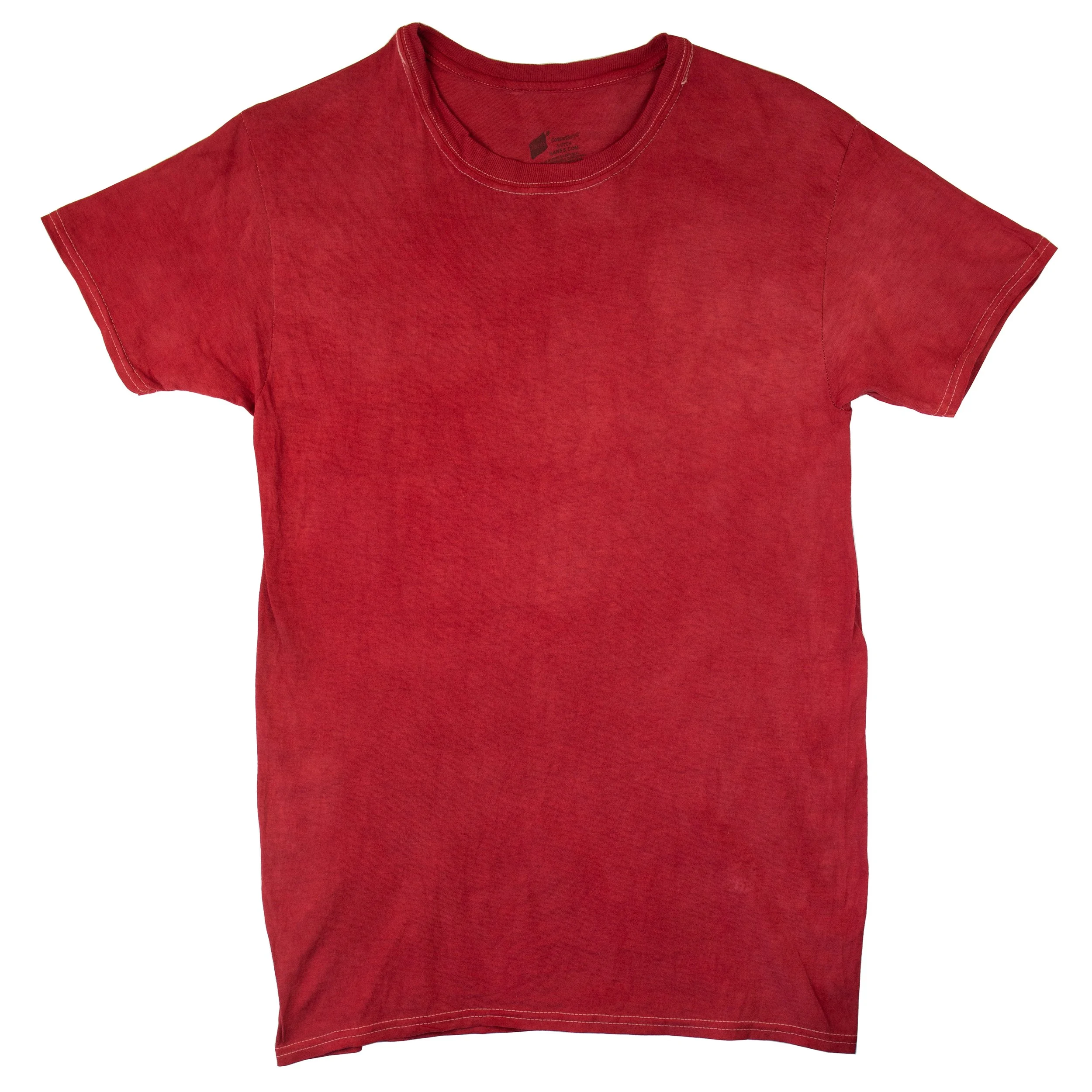
Ammoniacal Cochineal is important historic dyestuff that was used for dyeing shades of pink and rose during the Victorian era. We make it in our studio using our own Peruvian cochineal grains from a formula that dates back to 1874. Ammoniacal Cochineal gives beautiful shades of cotton candy pink and bubblegum pink on wool using as little as 1% weight-of-fabric*. This historical dyestuff is a PH-stable form of cochineal that is impervious to acids like cream of tartar and oxalic acid. That makes it possible to add cream of tartar to the mordant bath or the dyebath without shifting the color toward orange; it will always retain the cooler, more purplish hues of cochineal. On an alum mordant it gives pinks and magentas; on a tin mordant it produces the singular hue that Victorian dyers called “rose red.” It can also be combined with normal cochineal in the same dyebath to adjust the shade of red to your liking. Shepherd Textiles is making Ammoniacal Cochineal available to the public for the first time in more than a century. To extract the color, boil the small pieces of extract in water and then allow to cool. You may wish to filter the tiny particles of cochineal out of the dyebath before adding the fiber, or put the extract is a tea bag or dye bag first. Ideal for wool and silk; Ammoniacal Cochineal has no advantage over normal cochineal on cotton and linen. (Note that we previously called this product Lana Rosada, but have renamed it to reflect how it was referred to historically).
*For pink shades, pre-mordant the wool with 5% alum and 5.5% cream of tartar. For rose shades, dye in a single bath using 6% tin and 8% cream of tartar.
CAUTION: May contain slight traces of ammonia; avoid contact with eyes and mucus membranes. In case of contact, flush with lukewarm water. Do not mix with bleach. Wear gloves while handling to prevent stains on skin and clothing.
Ammoniacal Cochineal is important historic dyestuff that was used for dyeing shades of pink and rose during the Victorian era. We make it in our studio using our own Peruvian cochineal grains from a formula that dates back to 1874. Ammoniacal Cochineal gives beautiful shades of cotton candy pink and bubblegum pink on wool using as little as 1% weight-of-fabric*. This historical dyestuff is a PH-stable form of cochineal that is impervious to acids like cream of tartar and oxalic acid. That makes it possible to add cream of tartar to the mordant bath or the dyebath without shifting the color toward orange; it will always retain the cooler, more purplish hues of cochineal. On an alum mordant it gives pinks and magentas; on a tin mordant it produces the singular hue that Victorian dyers called “rose red.” It can also be combined with normal cochineal in the same dyebath to adjust the shade of red to your liking. Shepherd Textiles is making Ammoniacal Cochineal available to the public for the first time in more than a century. To extract the color, boil the small pieces of extract in water and then allow to cool. You may wish to filter the tiny particles of cochineal out of the dyebath before adding the fiber, or put the extract is a tea bag or dye bag first. Ideal for wool and silk; Ammoniacal Cochineal has no advantage over normal cochineal on cotton and linen. (Note that we previously called this product Lana Rosada, but have renamed it to reflect how it was referred to historically).
*For pink shades, pre-mordant the wool with 5% alum and 5.5% cream of tartar. For rose shades, dye in a single bath using 6% tin and 8% cream of tartar.
CAUTION: May contain slight traces of ammonia; avoid contact with eyes and mucus membranes. In case of contact, flush with lukewarm water. Do not mix with bleach. Wear gloves while handling to prevent stains on skin and clothing.


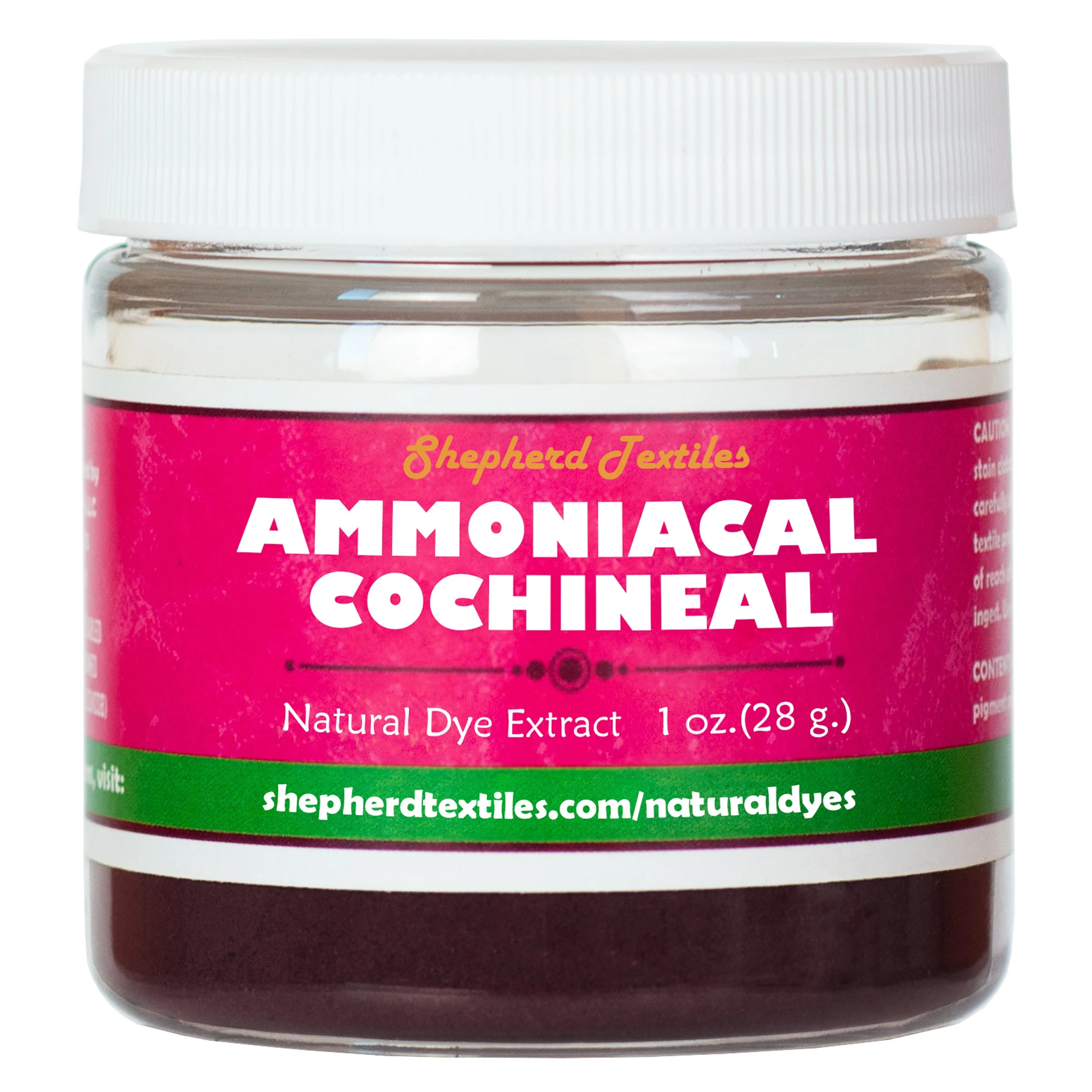 Image 1 of 9
 Image 2 of 9
 Image 3 of 9
 Image 4 of 9
 Image 5 of 9
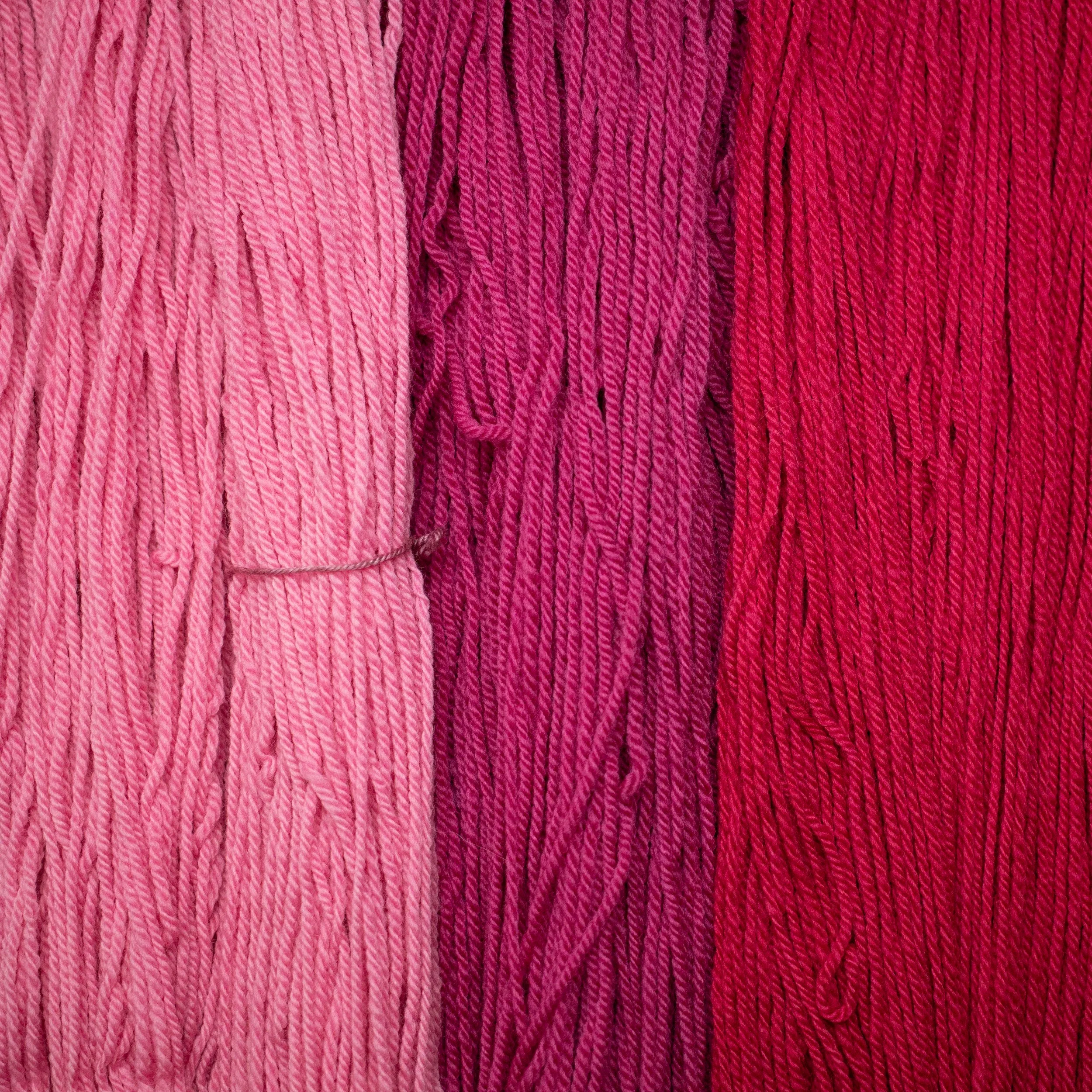 Image 6 of 9
 Image 7 of 9
 Image 8 of 9
 Image 9 of 9