

MULBERRY LEAF EXTRACT
Mulberry Leaf Extract
SOFT, LEAFY GREENS
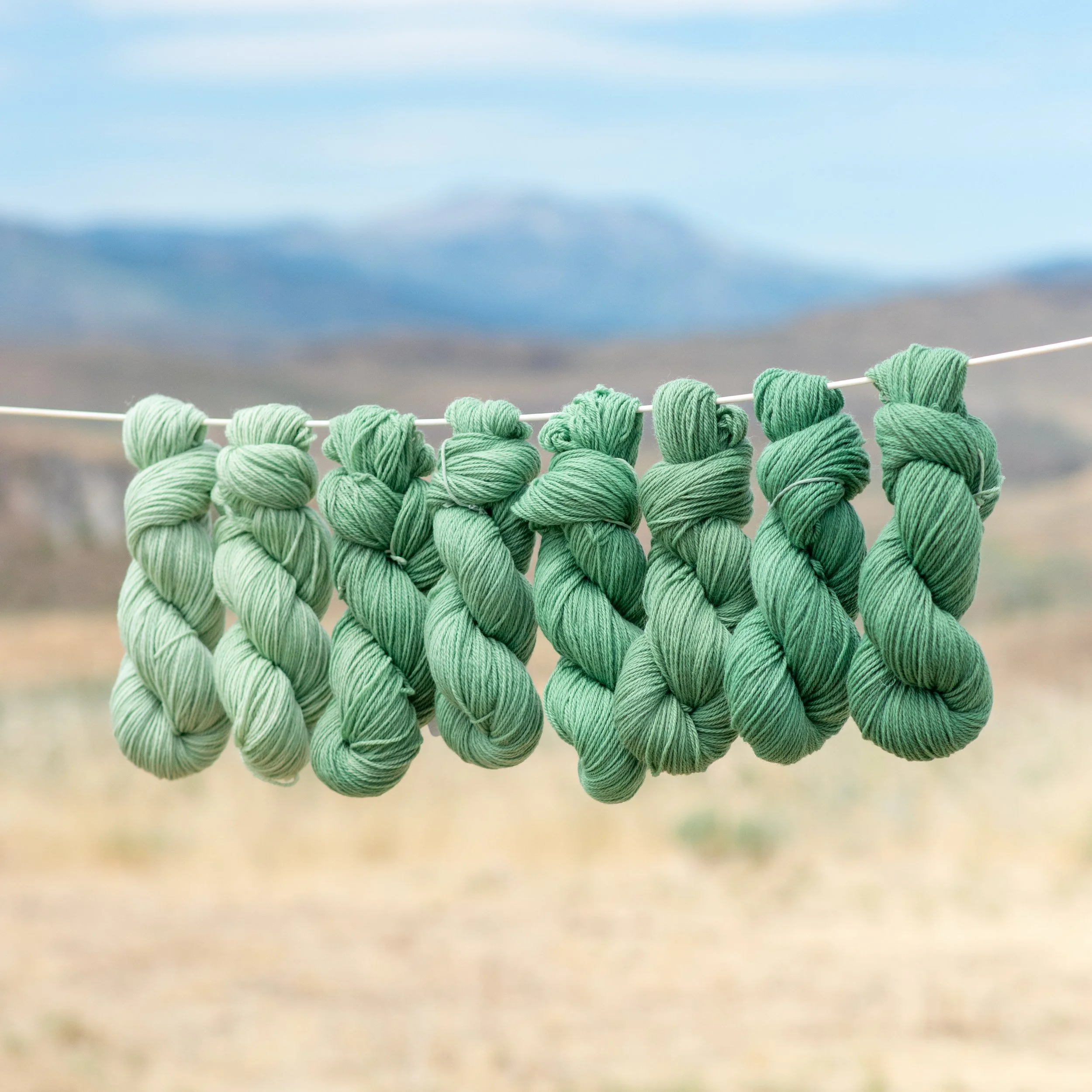
Shepherd Textiles Mulberry Leaf Extract is made from the green chlorophyll found in the leaves of the mulberry tree, morus alba, It is one of the only green textile dyes derived from natural sources. Mulberry Leaf Extract produces soft, pretty shades of mint green and jade green on all natural fibers including wool, cotton, and silk. It works with or without a mordant, which makes it an excellent choice both for experienced artists and for beginners just starting to explore plant-based dyes. Use at 5%-15% weight-of-fabric for jade green shades.

Shepherd Textiles Mulberry Leaf Extract is made from the natural chlorophyll found in the leaves of morus alba, the common mulberry tree. Chlorophyll itself is a poor textile dye because it is insoluble in water and turns brown when heated or exposed to sunlight. However, when dried mulberry leaves are cooked in a weak mordant bath of copper sulfate, the chlorophyll bonds with the copper to create stable sodium copper chlorophyllin. Chlorophyllin made from mulberry leaves is a dark green powder with a strong smell of green tea. It dissolves easily in water and keeps its brilliant green hue, even when heated. Use at 5%-10% weight-of-fabric for jade greens.
Before using, please read our guide to Dyeing with Mulberry Leaf Extract for color recipes, background, and safety information.
Product of India.
1. Background on Mulberry Leaf Extract (Chlorophyllin)
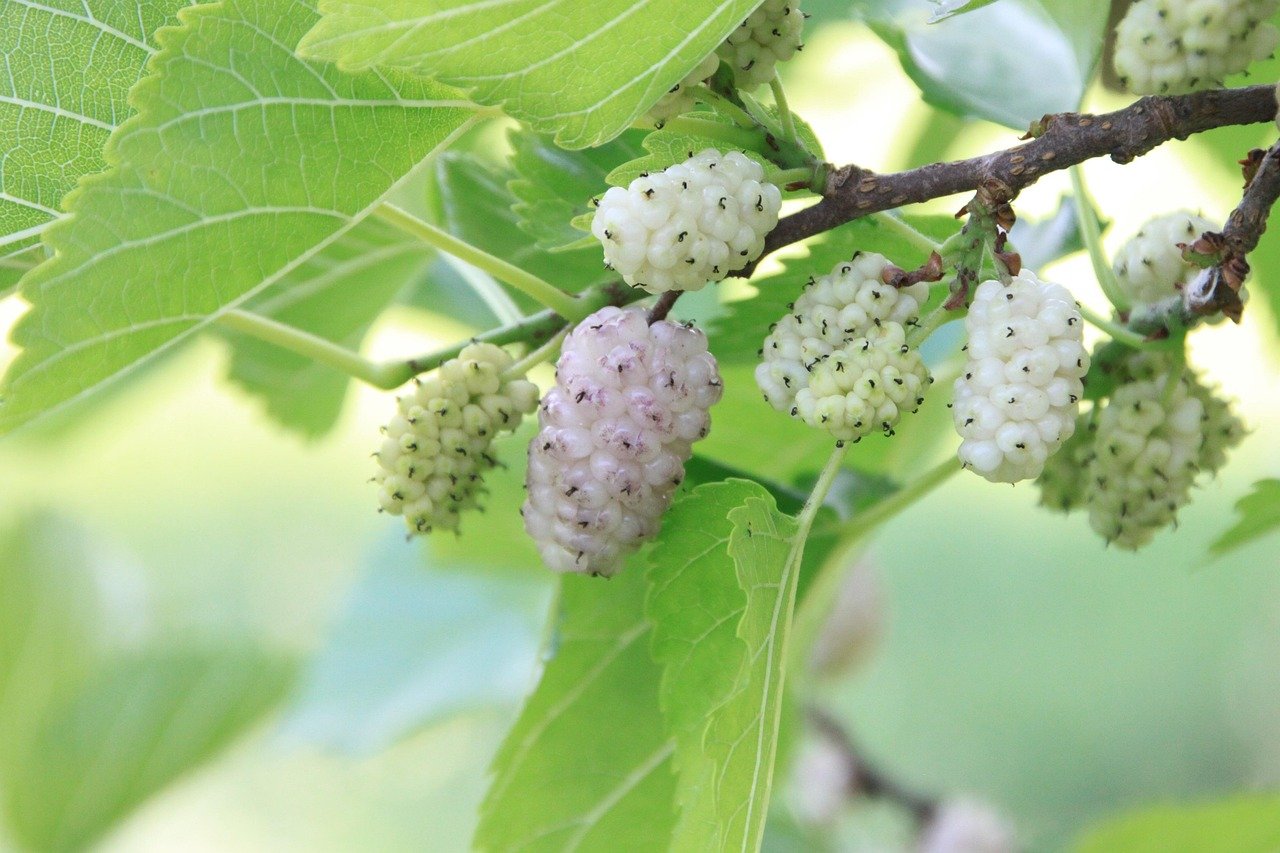
Cultures all across the world have tried at various times to harness chlorophyll, the green pigment in plant matter, in order to dye textiles a bright leafy green. The same problem always occurs: no matter how vibrant the freshly dyed goods appear, the chlorophyll begins to break down as soon as it is removed from its living plant matrix. Textiles dyed with chlorophyll, like fallen leaves, quickly fade and turn brown. However, scientists have discovered that chlorophyll can be converted to a more stable form known as sodium copper chlorophyllin, which is much more resistant to breakdown than raw chlorophyll. Chlorophyllin has found a variety of new uses, including as a colorant for foods and drinks and as a supplement being studied for its antioxidant effects. It also works as a textile dye. In fact, it is one of the only direct green dyes in all of nature (nature is awash in yellows and browns, but greens are exceedingly rare). Shepherd Textiles Mulberry Leaf Extract is rich in chlorophyllin made from the leaves of the white mulberry tree, morus alba.
Mulberry Leaf Extract behaves differently from most natural dyes. It can be applied either with or without an aluminum mordant, although using a mordant will result in darker colors using less dye. The shade of green is not strongly affected by the pH of the dye bath or other typical dyeing modifiers. Darker greens are obtained simply by using more dye, although after a certain point there are diminishing returns when more dye is added to the bath. Chlorophyllin works best at neutral pH in soft water; acidic dye baths (with a pH of 6 or lower) or very hard water can cause the dye to precipitate as pigment particles, which means some of the dye is wasted. It should also be noted that chlorophyllin, while much more stable than raw chlorophyll, still has modest fastness to light and will fade if left in the sun. Mulberry Leaf Extract is a useful dye both for experienced dyers looking for a direct green, or beginners who just want to dye a tshirt without worrying about all the various steps of tanning, mordanting, and fixing. Use at 5%-15% for jade green shades.
2. Safety Precautions
This product is intended for textile projects only.
Do not ingest.
Avoid eye contact. If eye contact occurs, rinse well with cool water.
Avoid direct skin contact. If skin contact occurs, rinse well with cool water.
Wear gloves, a mask, and eye protection while handling the dry pigment. Work in a well-ventilated space, and wash hands after use.
Not for use in food, cosmetics, or hair care products.
Open carefully to avoid spilling or creating dust. If a spill occurs, quickly wipe up with a paper towel or disposable rag.
Mulberry Leaf Extract can permanently dye clothing, countertops, rugs, utensils, or other property. Avoid contact with anything not meant to be dyed.
Use only dye pots and utensils dedicated to dyeing. Do not use any pots, containers, spoons, tongs, thermometers, or other utensils that will be used for food preparation.
Mulberry Leaf Extract, and all dye baths and mordant liquors made while dyeing, should be kept out of reach of children and pets. Use only with adult supervision.
Shepherd Textiles, LLC is not liable for any misuse of this product or any unintended staining of your clothing, workspace, or other property. Use only as directed.
3. Recommended Supplies

Dye pot. Use a stainless steel dye pot large enough to hold all your fibers, with plenty of room for them to move around and for the liquid to circulate freely. Mulberry Leaf Extract may leave faint stains on metal dye pots. If so, the stain can usually be scrubbed out with a scouring pad.
Metal tongs. A pair of tongs is useful for stirring and taking fabric out. Use tongs dedicated to dyeing, and not for food preparation.
Rubber gloves. Wear rubber gloves while handling extract powder and while handling mordanted/dyed fiber before it is rinsed.
Candy thermometer. Use a thermometer to keep track of the proper temperature during mordanting and dyeing.
Scale. Use a scale to weigh out fiber, mordant, and extract powder.
[Optional] Aluminum mordant. Mordanting the fibers with aluminum before dyeing will result in slightly darker colors and modestly improved resistance to fading, although Mulberry Leaf Extract will work without a mordant as well.
4. Preparation: Scouring & Mordanting
Mulberry Leaf Extract is a direct dye, and it will work on natural fibers with or without a mordant. Mordanting is optional. However, using an aluminum mordant will cause the color to exhaust onto the fiber more quickly, and can make it possible to use less dye to get a particular shade of green. Regardless of whether or not a mordant is used, however, the fibers should be well scoured (cleaned) before beginning. If the fibers are not scoured first, the color will turnout uneven and will be prone to crocking (rubbing off).
For woolen fibers: Scour and mordant with 10% alum and 11% cream of tartar.
Weigh out the fibers you plan to dye (while they are dry). Multiply that weight by 0.1 to get the amount of alum you will need, and by 0.11 to get the correct amount of cream of tartar. For example, for a 100-gram skein of wool yarn, you will 10 grams of alum and 11 grams of cream of tartar.
Before mordanting, scour (clean) the fibers well. Fill a dye pot with enough warm water for the fibers to move around freely. Add 1 teaspoon of a pH-neutral detergent like Synthrapol per pound of wool (some dyers like to use Orvus Paste instead; refer to the manufacturer’s instructions for proper use). Add the woolen fibers and raise the heat to 160°F (70°C). Maintain this heat for one hour, stirring occasionally so the fibers scour evenly. After an hour, turn off the heat. When the fibers are cool enough to handle safely, remove them and rinse in several changes of warm water until the water runs clear. Be sure to handle woolen fibers carefully to avoid felting them. Do not wring them, and do not move them from hot water directly into cold water, because sudden temperature changes can encourage woolen fibers to felt.
When ready to begin mordanting, fill a dye pot with enough warm water for the fibers to move around freely.
Add the cream of tartar first, and mix well until dissolved. Add the alum next, and mix well until dissolved.
Gently place your wetted, scoured fibers into the mordant bath.
Gradually heat mordant bath to 180°F (82°C) over the course of about half an hour. Maintain the heat at 180°F for 1 hour, stirring occasionally to make sure the fibers mordant evenly. Keep a lid on the bath as much as possible, as any steam will be mildly acidic.
After 1 hour, turn off the heat and allow the mordant bath to cool. The fibers can be removed as soon as they are cool enough to safely handle, or they can be left to steep in the mordant bath until it has cooled down to room temperature (which will slightly increase the amount of mordant that is absorbed).
Remove the mordanted fibers and rinse well in two or three changes of lukewarm water. The fiber should not be washed with detergent, but excess mordant and cream of tartar should be rinsed out before dyeing.
Proceed directly to dyeing.
Dispose of mordant solution according to local guidelines.
For cotton & linen: Scour and mordant with a specialized aluminum mordant.
When dyeing cotton and linen, the fibers should first be well-scoured (cleaned). They can then optionally be mordanted with a specialized aluminum mordant like Aluminum Acetate, Aluminum Lactate, or Aluminum Formate Pro. See each product page for specific instructions.
For silk: Scour and mordant with 15% alum
Weigh out the fibers you plan to dye (while they are still dry). Multiply that weight by 0.15 to get the amount of alum you will need.
Scour the silk. Fill a dye pot with warm water and add 1 tsp soap (Synthrapol or Orvus Paste) per pound of fiber. Add the fibers and gently heat the scouring bath to 160°F (70°C). Maintain this temperature for one hour, then turn off the heat and allow to cool. When cool enough to handle safely, remove and rinse in warm water.
When ready to begin mordanting, fill a dye pot with enough warm water for the fibers to move around freely. Add the alum and mix well until dissolved.
Gently place your wetted, scoured fibers into the mordant bath.
Gradually heat mordant bath to 160°F (70°C) over the course of about half an hour. Maintain the heat at 160°F for 1 hour, stirring occasionally to make sure the fibers mordant evenly. Keep a lid on the bath as much as possible, as any steam will be mildly acidic.
After 1 hour, turn off the heat and allow the mordant bath to cool down to room temperature. The fibers can be removed as soon as they are cool enough to safely handle, or they can be left to steep in the mordant bath overnight. This will increase the amount of mordant that is absorbed, but make sure the fibers are fully submerged and no bubbles are trapped beneath them, otherwise the dye job will turn out uneven.
Remove the mordanted fibers and rinse well in two or three changes of lukewarm water. The fiber should not be washed with detergent, but excess mordant should be rinsed out before dyeing.
Proceed directly to dyeing.
Recipes
5. Natural Green on Woolens
Mulberry Leaf Extract will bond to textile fibers like wool even without the use of a mordant, and it works very well when applied in this way (although more dye is required to get medium or darker shades of green). The dye will not exhaust onto the fibers — they will absorb only a portion of the dye in dye bath, so if you are dyeing dark shades there will be a lot of color leftover. So long as the excess dye has not precipitated (see the accompanying note) the dye bath can be re-used to dye more wool. The colors produced are various cool shades of green, from a mint ice-cream shade to a fine medium green. Note that Mulberry Leaf Extract has modest fastness to light, so this recipe is best used for items that will be stored out of light when not in use, or items that can easily be re-dyed if they fade.
Wool yarn, 1% WOF
Wool yarn, 5% WOF
Wool yarn, 15% WOF
Prepare the woolen fibers by scouring them well, but do not mordant them. They should be clean and fully wetted-out before going into the dye pot.
Fill your dye pot with enough warm water for your fibers to move around freely [see Note 1].
Weigh out the appropriate weight-of-fabric (WOF) of Mulberry Leaf Extract powder. Use 1% for a mint ice cream shade, 5% for a light jade green, or 15% for a medium green. Add the powder to the dye bath and mix well until any clumps are dissolved.
Add your wetted, unmordanted wool to the dye bath.
Heat the dyebath to 180°F gradually, over the course of about 30 minutes, stirring regularly so that the wool dyes evenly. Maintain this heat for 1 hour and continue to stir occasionally. After 1 hour, turn off the heat and allow to cool to room temperature.
When the wool has cooled down, remove and rinse well in warm water until the water runs clear. Soap or detergent should not be necessary, because the excess color should come off fairly easily with a few rinses. However, if necessary, wash with a pH-neutral detergent like Synthrapol. Follow the manufacturer’s directions for best results. CAUTION: Mulberry Leaf Extract may bleed if not thoroughly rinsed.
Hang up to dry out of direct sunlight.
Note that if you are dyeing a medium or dark shade of green, there may be a lot of dye left in the dye bath when you are finished. So long as the dye has not precipitated (turned into tiny little solid particles), the dye bath can be re-used to dye more wool.
NOTE 1. The sodium copper chlorophyllin in Mulberry Leaf Extract will tend to precipitate out of solution in either acidic water (anything under pH 6) or hard water (due to the calcium present). Since we are not using a mordant for this recipe, precipitating due to free acids in the bath is highly unlikely. However, if you have very hard water, the excess dye might still precipitate, in which case the dye bath cannot be reused. If you have very hard water and you want to re-use the same dye bath to dye subsequent pieces, you may wish to use distilled water instead.
6. Natural Green on Cotton & Linen
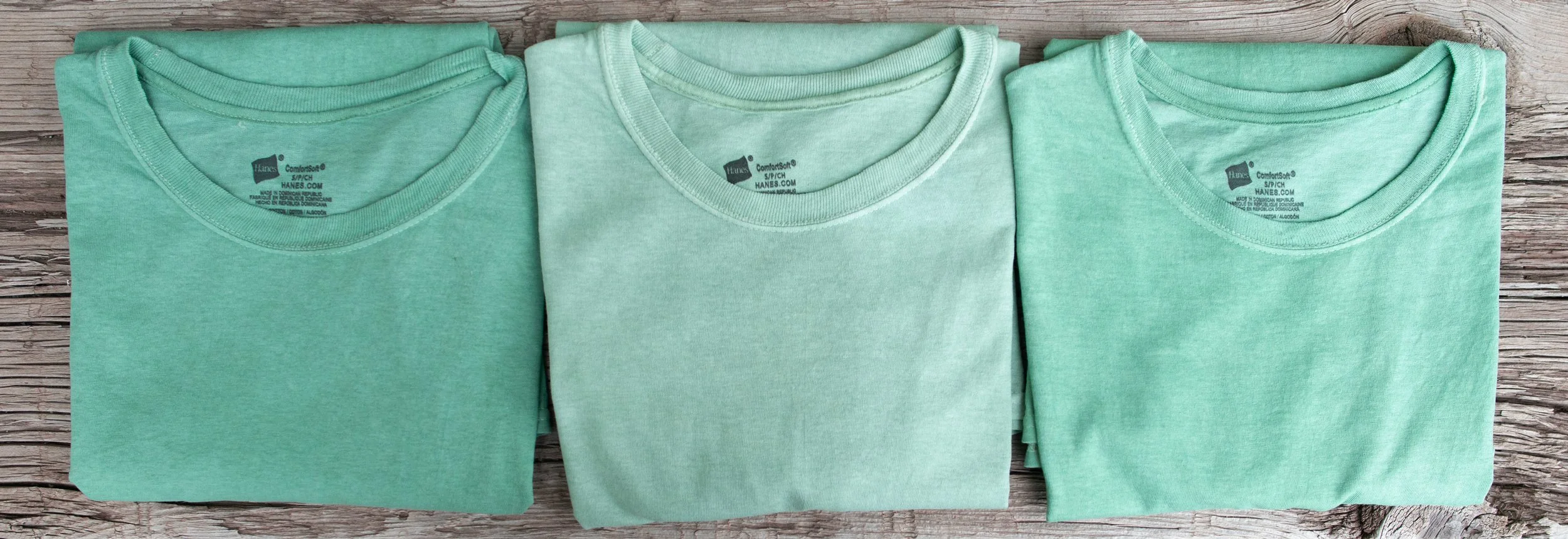
Mulberry Leaf Extract is one of a handful of dyes that works perfectly well on plant fibers like cotton and linen without the need for a mordant. The shades produced are soft, cool jade greens. This is a nice way to dye a tshirt without having to worry about tanning, mordanting, and fixing the mordant. Darker colors can be dyed by using more extract. The fibers will only ever absorb a fraction of the dye from the dye bath, so if you are dyeing dark colors there will likely be a lot of color leftover in the dye bath. So long as the extra dye has not precipitated, the dye bath can be reused.
Cotton shirt, 5% WOF
Cotton shirt, 15% WOF
Cotton shirt, 25% WOF
Prepare the cotton or linen fibers by scouring them well, but do not mordant them. They should be clean and fully wetted-out before going into the dye pot.
Fill your dye pot with enough warm water for your fibers to move around freely [see Note 1].
Weigh out the appropriate weight-of-fabric (WOF) of Mulberry Leaf Extract powder. Use 5% for a mint ice cream shade, 15% for a light jade green, or 25% for a medium green. Add the powder to the dye bath and mix well until any clumps are dissolved. If any clumps are left, they may cause dark splotches on the fiber.
Add your wetted, unmordanted fibers to the dye bath.
Heat the dyebath to 180°F gradually, over the course of about 30 minutes, stirring regularly so that the fibers dye evenly. Maintain this heat for 1 hour and continue to stir occasionally. After 1 hour, turn off the heat and allow to cool to room temperature.
When the cotton has cooled down, remove and rinse well in warm water until the water runs clear. Soap or detergent should not be necessary, because the excess color should come off fairly easily with a few rinses. However, if necessary, wash with a pH-neutral detergent like Synthrapol. Follow the manufacturer’s directions for best results. CAUTION: Mulberry Leaf Extract may bleed if not thoroughly rinsed.
Hang up to dry out of direct sunlight.
Note that if you are dyeing a medium or dark shade of green, there may be a lot of dye left in the dye bath when you are finished. So long as the dye has not precipitated (turned into tiny little solid particles), the dye bath can be re-used to dye more fibers.
NOTE 1. The sodium copper chlorophyllin in Mulberry Leaf Extract will tend to precipitate out of solution in either acidic water (anything under pH 6) or hard water (due to the calcium present). Since we are not using a mordant for this recipe, precipitating due to free acids in the bath is highly unlikely. However, if you have very hard water, the excess dye might still precipitate, in which case the dye bath cannot be reused. If you have very hard water and you want to re-use the same dye bath to dye subsequent pieces, you may wish to use distilled water instead.
7. Mordanted Green on Woolens
Mulberry Leaf Extract bonds with aluminum mordants, and mordanted fiber will tend to exhaust the color in the bath much more quickly than unmordanted fibers. That means that less dye can be used to achieve the same depth of color. However, the trade-off is that any excess dye in the dye bath will tend to precipitate (turn into lots of tiny green particles of pigment, like green sand), which means the dye bath cannot be reused. This happens because, as the dye bath heats up, acids left over from the mordanting process diffuse out of the wool, eventually lowering the pH of the bath below 6, causing any remaining free-floating dye to precipitate. However, if you are not planning to reuse the dye bath to dye more fibers, this may not be something to worry about.
Wool yarn, 1% WOF
Wool yarn, 5% WOF
Wool yarn, 10% WOF
Fill your dye pot with enough warm water for your fibers to move around freely.
Weigh out the appropriate weight-of-fabric (WOF) of Mulberry Leaf Extract powder. Use 1% for a mint ice cream shade, 5% for a light jade green, or 10% for a medium jade green. Add the powder to the dye bath and mix well until any clumps are dissolved.
Add your wetted, alum-mordanted wool to the dye bath.
Heat the dyebath to 180°F very gradually, over the course of about 30 minutes, stirring regularly so that the wool dyes evenly. Maintain this heat for 1 hour and continue to stir occasionally. After 1 hour, turn off the heat and allow to cool to room temperature.
When the wool is cool enough to handle safely, remove with tongs and rinse well in warm water until the water runs clear. Soap or detergent should not be necessary, because the color in the dye bath should have mostly exhausted onto the wool. However, if necessary, wash with a pH-neutral detergent like Synthrapol. Follow the manufacturer’s directions for best results. CAUTION: Mulberry Leaf Extract may bleed if not thoroughly rinsed.
Hang up to dry out of direct sunlight.
7. Greens on Silk
Mulberry Leaf Extract will dye silk with or without an aluminum mordant, the same way it will dye wool and cotton. If you are dyeing heavy silks you can use a weight-of-fabric calculation to build the dye bath, using similar quantities as if you were dyeing with wool. However, with very thin silks, it is sometimes more useful to make a concentrated dye bath based on grams per liter, and then “dye to shade” (that is, make a strong dye bath, dye the silk until it looks dark enough, then remove and rinse). There will be a lot of color left in the bath when using this method, so you may wish to have some other scoured fibers ready to throw in the exhaust bath to use some of it up.
19 momme silk, 2.5 grams/liter
19 momme silk, 2.5 grams/liter
19 momme silk, 2.5 grams/liter
Fill your dye pot with enough warm water for your fibers to move around freely.
Weigh out the appropriate amount of Mulberry Leaf Extract powder. For dyeing heavy silks use between 5% and 15% weight-of-fabric, similar to wool. For thin silks like habotai, add 2.5 grams of Mulberry Leaf Extract per liter of water in the dye bath (approximately 10 grams per gallon), or more or less depending on how dark of a shade you are aiming for.
Add your silk to the dye bath. Either scoured, unmordanted silk or alum-mordanted silk can be used (note that we have used alum-mordanted silk for the swatches above).
Heat the dyebath to 160°F very gradually, over the course of about 30 minutes, stirring regularly so that the wool dyes evenly. Maintain this heat for 1 hour and continue to stir occasionally. After 1 hour, turn off the heat and allow to cool to room temperature. Slightly darker shades can sometimes be obtained by letting the silk steep overnight. For lighter shades on thin silks, you may wish to remove the silk before a full hour is up, although note that the green will appear much more pale after the silk has completely dried.
When ready to proceed, remove the silk and rinse well in warm water until the water runs clear. Soap or detergent should not be necessary, because the excess color should come off with a few rinses. However, if necessary, wash with a pH-neutral detergent like Synthrapol. Follow the manufacturer’s directions for best results. CAUTION: Mulberry Leaf Extract may bleed if not thoroughly rinsed.
Hang up to dry out of direct sunlight.
*All text and images are copyright of Shepherd Textiles, LLC. Do not reproduce without permission and attribution.