

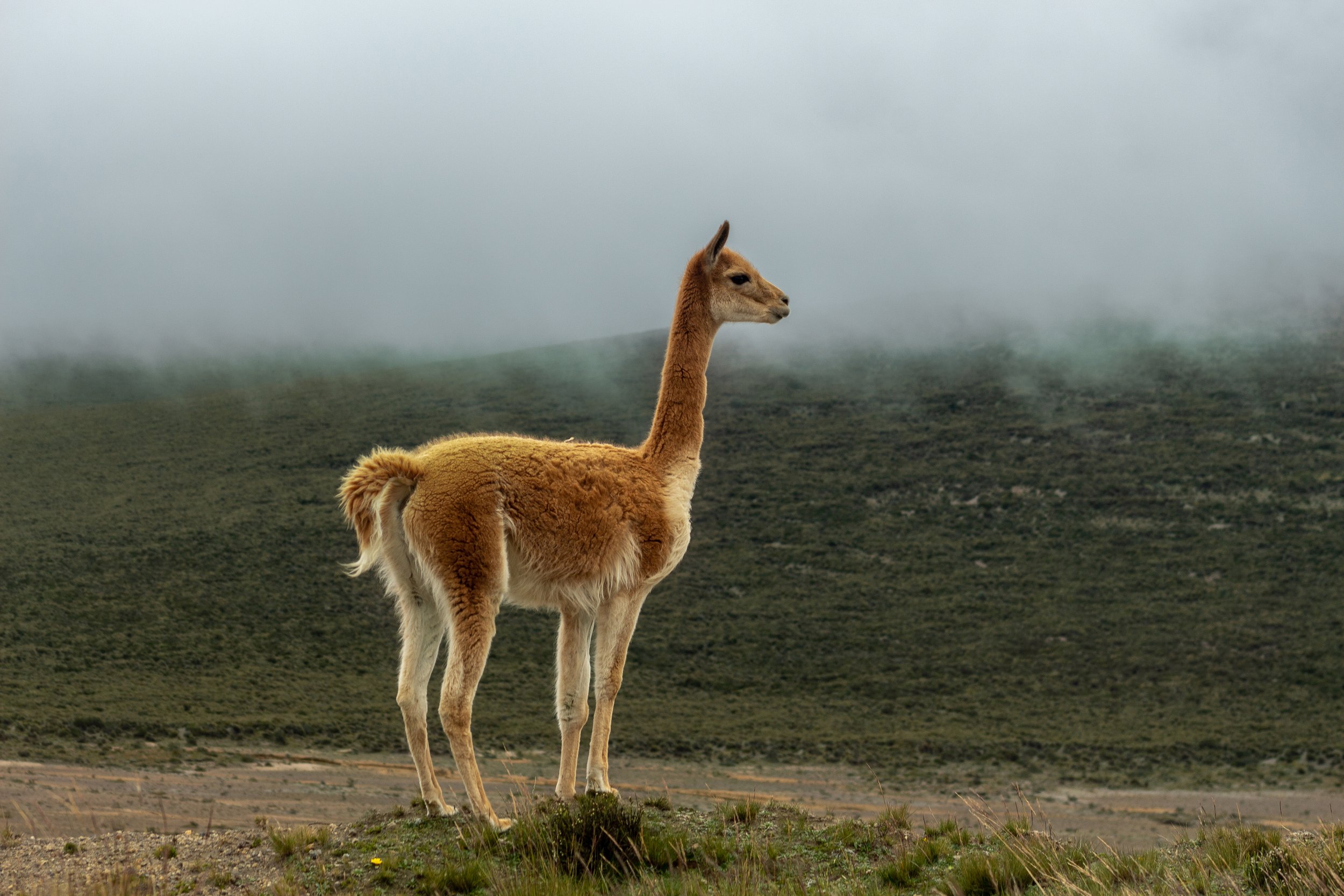
Wild Andean Vicuña
THE WORLD’S MOST EXCEPTIONAL FIBER.
Vicuña are the wild ancestors of domesticated alpaca, and their fleeces contain some of the finest and most luxurious natural fibers in existence. Small populations of free-ranging vicuña still live in the Andes mountains, and once a year, indigenous communities work together to drive them into temporary paddocks made of netting. The vicuña are gently shorn of their fleeces as part of this chaccu, a ritual with roots going as far back as the Incan empire. The vicuña are then released back into the wild. This annual harvest is carefully regulated by international convention, and only a tiny quantity of vicuña fiber is produced each year. Most is immediately bought up by Italian fashion houses. A four-ounce vicuña scarf currently retails for around $3,000—or $27 per gram—and a vicuña jacket for closer to $20,000. We import our vicuña from mills in Italy and directly from producers in South America. We are delighted to make this exceptional fiber available to hand-spinners, knitters, and fiber artists of all kinds.
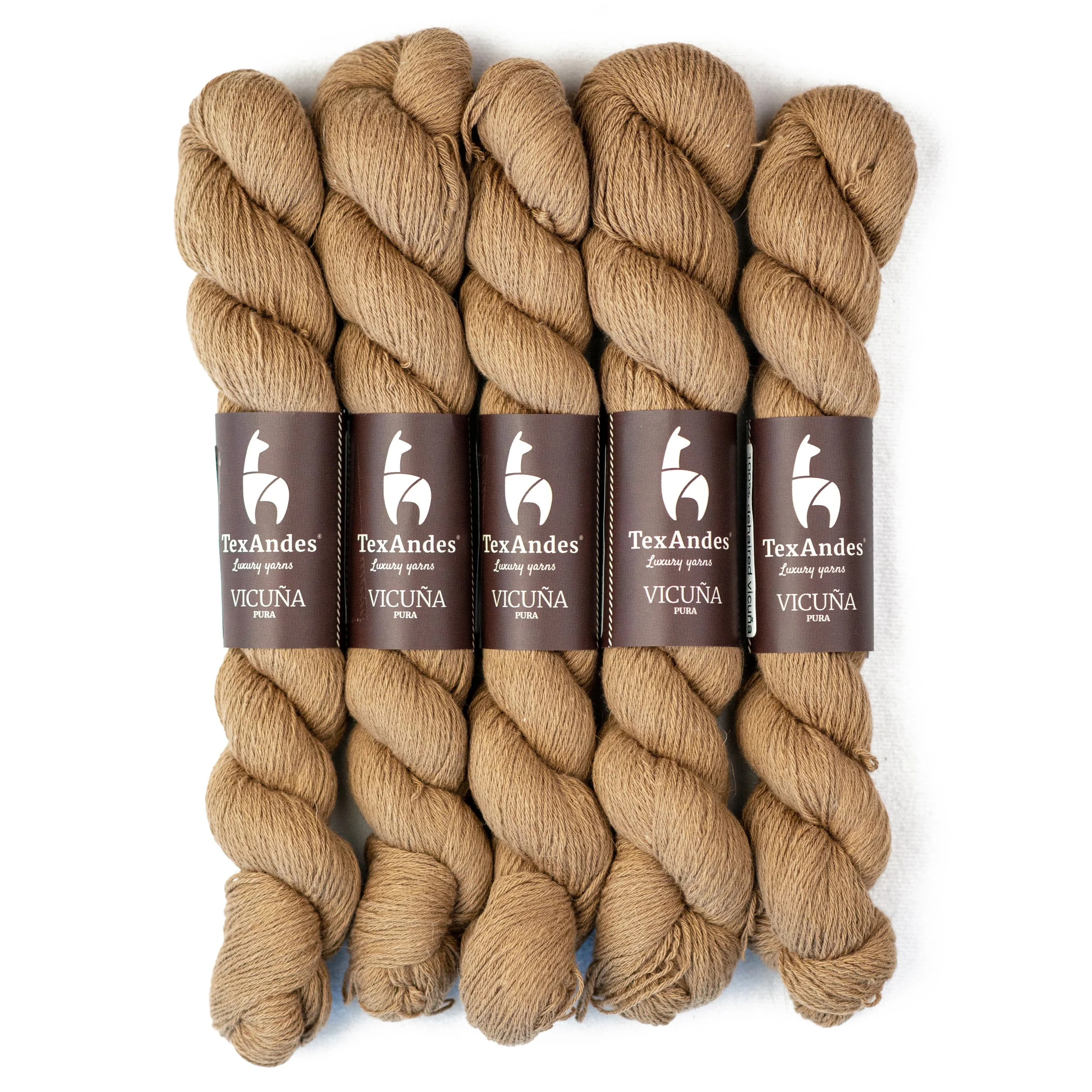
Soft as a cloud. This 100% wild vicuña knitting yarn is spun in Argentina by TexAndes, from fleeces shorn during traditional chaccus. COMING SOON.
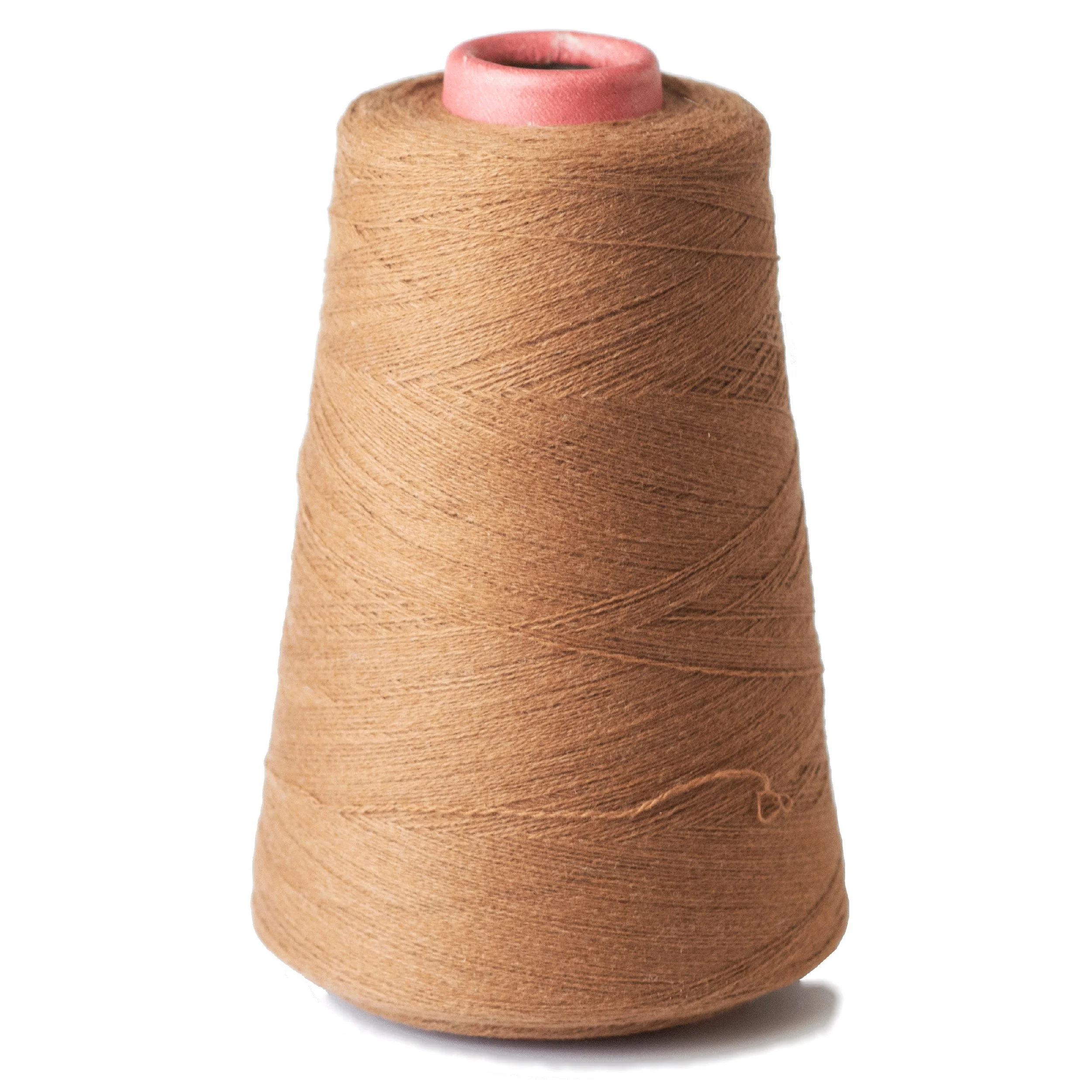
A lace-weight yarn made from 100% wild vicuña, for weaving fabrics of unparalleled luxury. Use it as weft to experience the opulence of real vicuña.
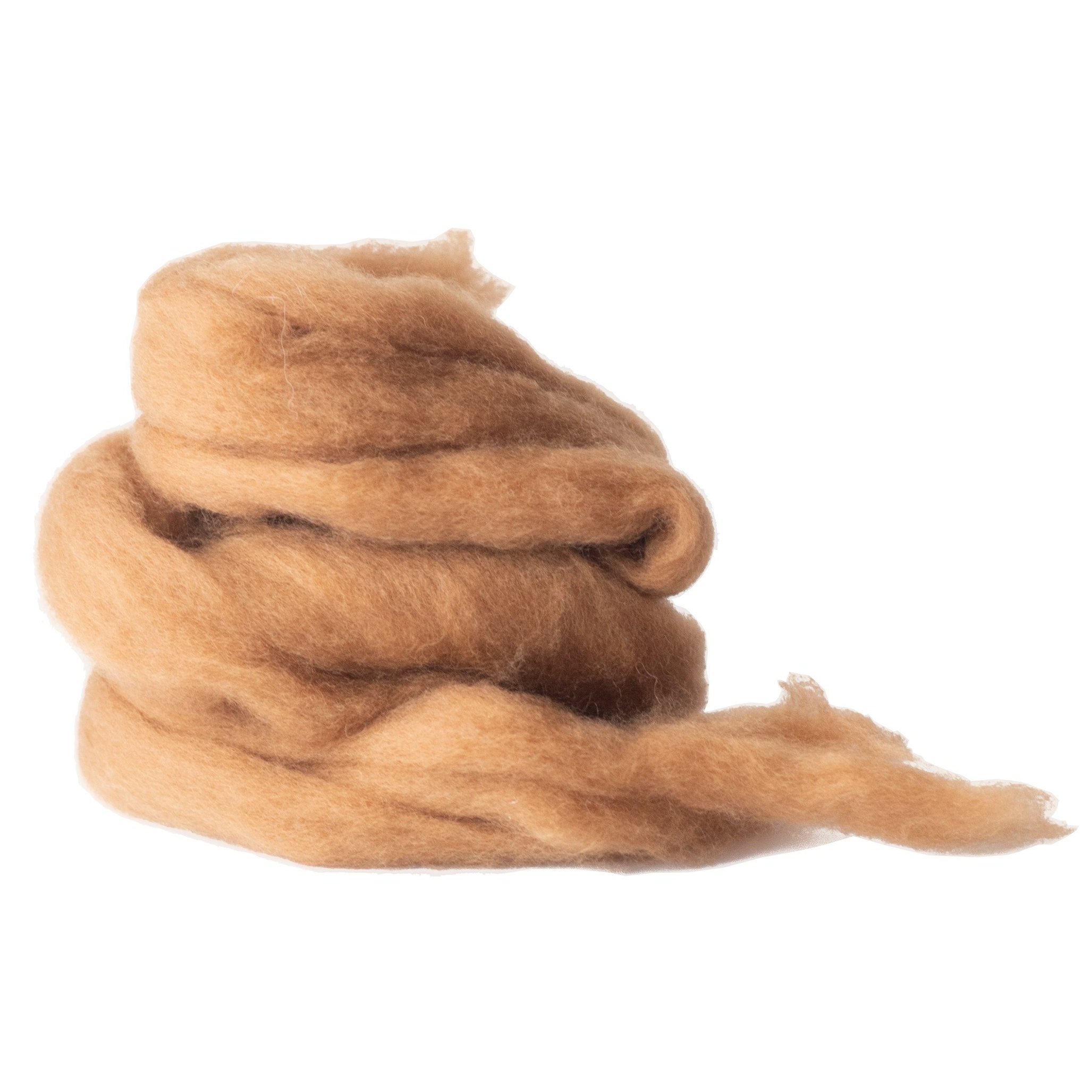
Pure wild vicuña fiber. Carded and combed in Argentina, and ready for hand-spinning, blending, felting, or simply enjoying as it is.
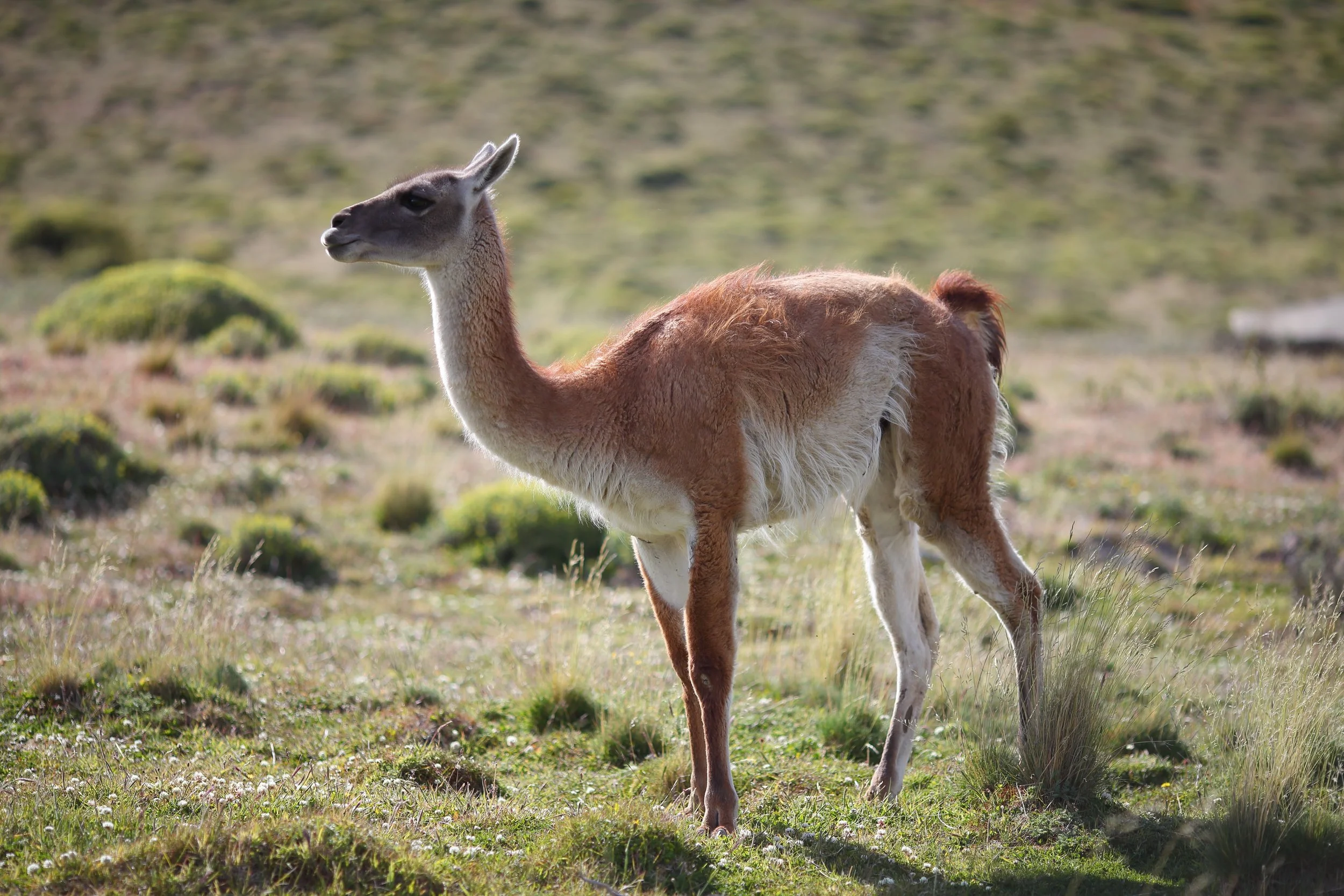
Wild Andean Guanaco
THE PRIDE OF THE ANDES
Whereas vicuña are the ancestors of alpaca, the closely related guanaco is the forebear of the domesticated llama. Guanaco have fleeces very nearly as fine as their vicuña cousins, with a remarkable softness and a wonderful natural cinnamon shade. However, guanaco are less rare than vicuña, especially in Argentina where more than a million wild guanaco roam freely in the southern reaches of Patagonia. That means that guanaco fiber is a more plentiful and more affordable luxury than vicuña (which is never available in large enough quantities to meet demand). Guanaco fiber is gathered in the same way as vicuña, by driving the animals into temporary paddocks, shearing them, and then releasing them back into the wild. Guanaco fiber is buttery soft, warmer than sheep’s wool, and blends well with other fibers. A beautiful choice for the finest fiber art projects.
.
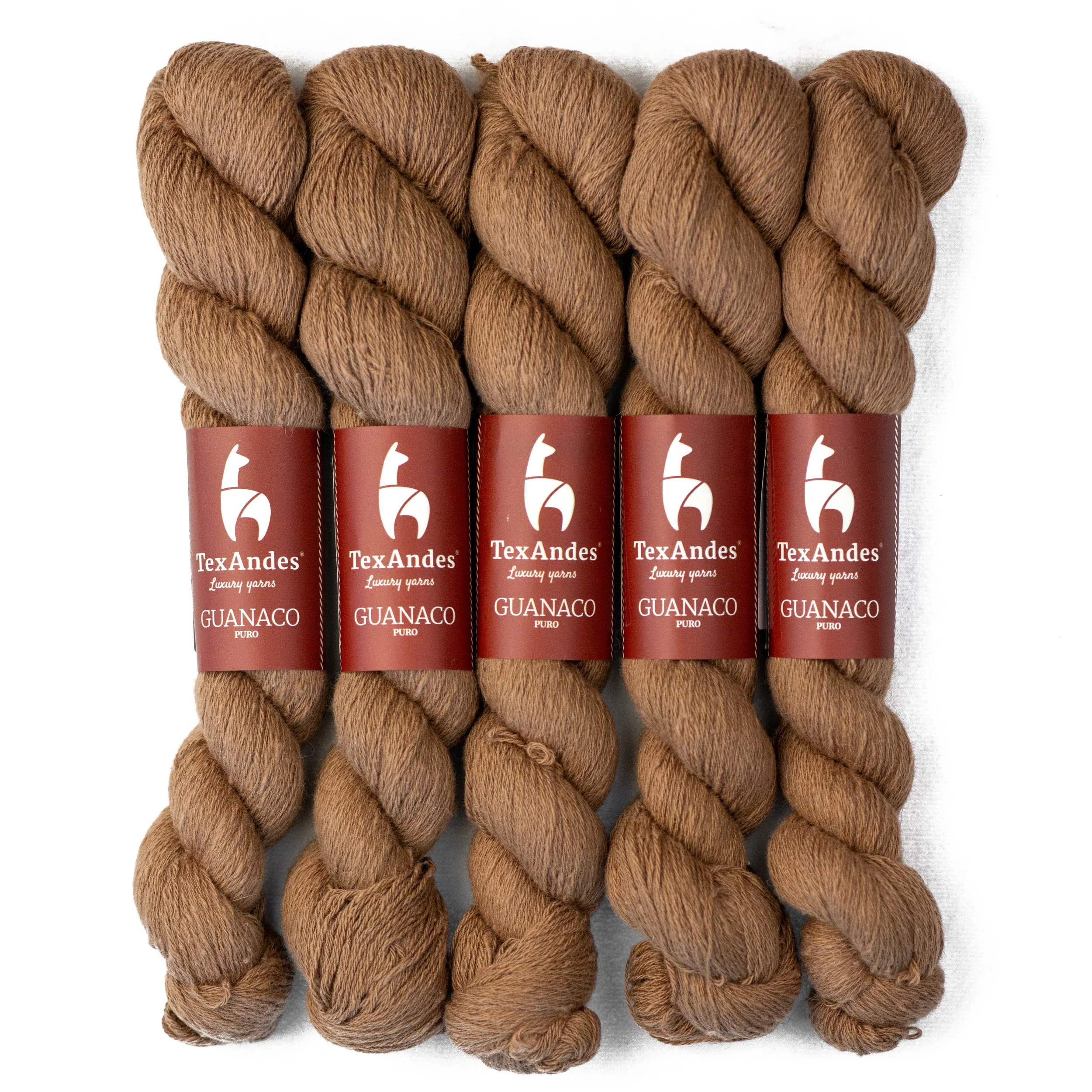
Buttery-soft pure guanaco. This 100% wild guanaco knitting yarn is spun in Argentina by TexAndes from fine cinnamon-colored fleeces. COMING SOON.
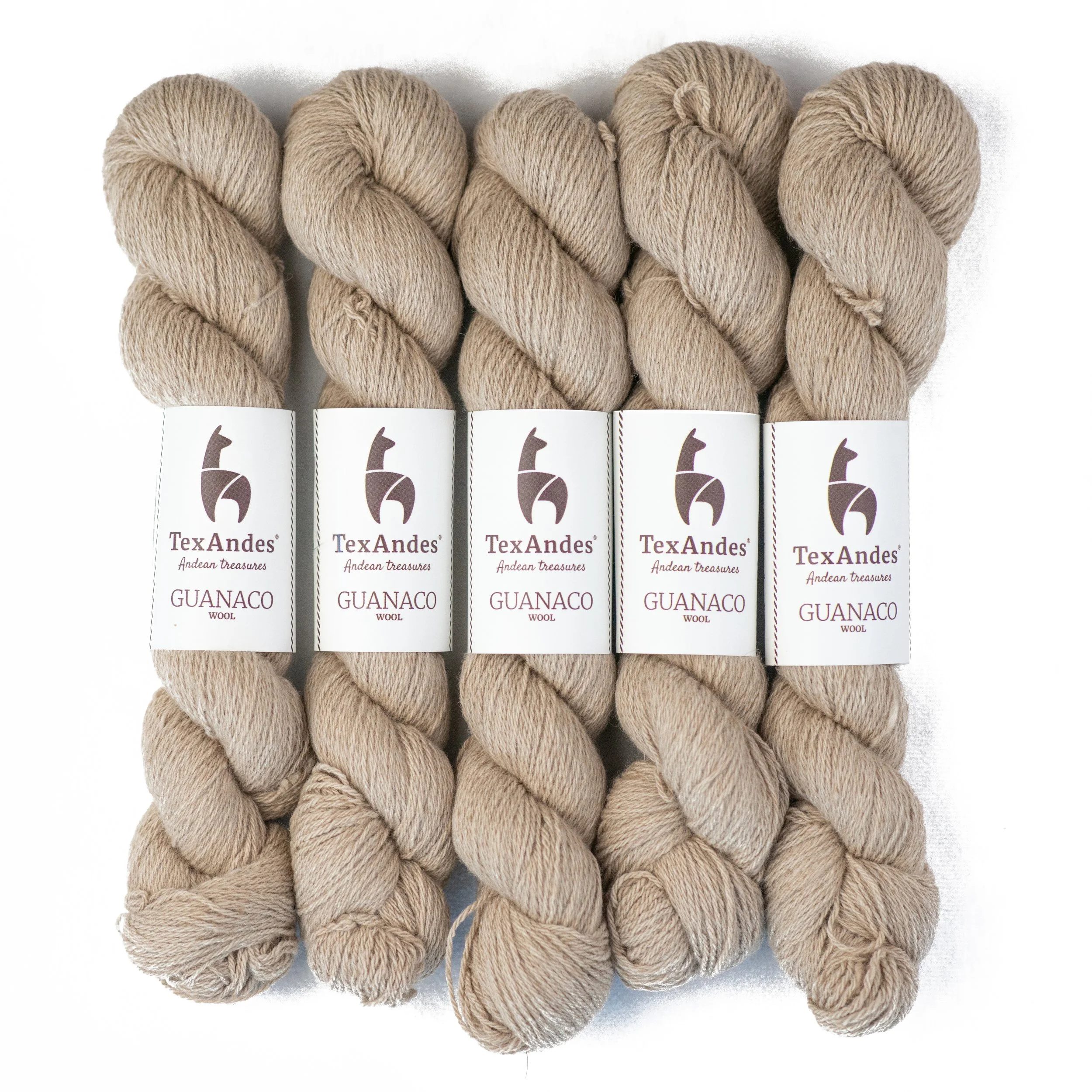
Affordable luxury. A blend of 30% wild guanaco and 70% ultrafine merino wool. The best of both worlds: a yarn that’s soft, warm, and durable. COMING SOON.
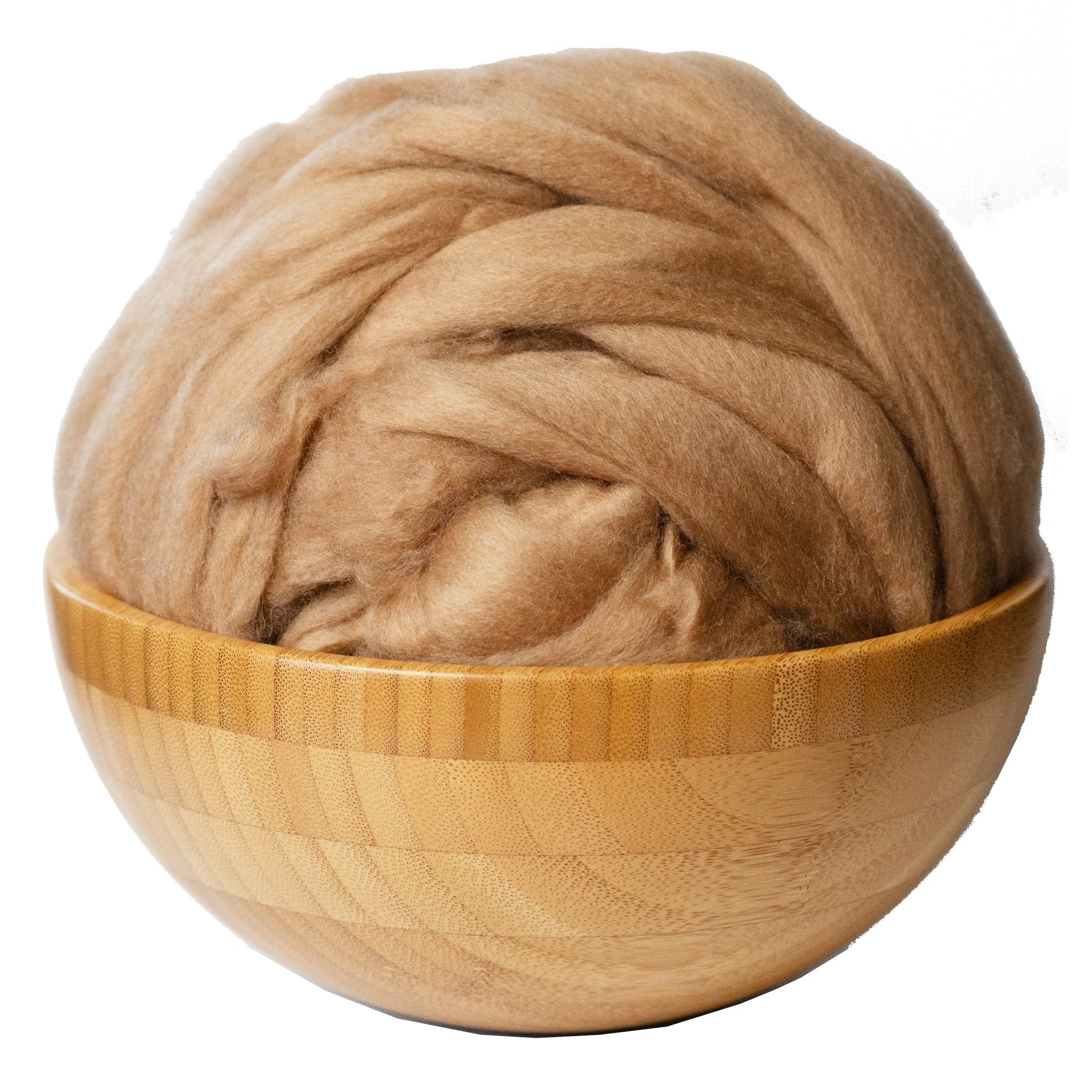
Pure wild guanaco fiber. Carded and combed in Argentina, and ready for blending, felting, or hand-spinning into the softest of yarns.
CHACCU
The chaccu or chaku is an ancient tradition belonging to the indigenous peoples of the Andean plateau. Once a year, rural communities in the Andes work together to herd their local vicuña or guanaco into temporary paddocks made of netting. The animals are gently sheared of their fiber, then released back into the wild. This sustainable approach, informed by traditional knowledge, has helped to make vicuña one the great success stories of modern conservation. See the attached video to watch a chaccu being held in Catamarca in northern Argentina (voiceover in Spanish only).
Frequently Asked Questions
-
Several factors determine how soft a fiber feels, including crimp (how springy it is) and smoothness. However, the most important factor is fineness. How thick is each individual fiber? Finer fibers feel softer to the human touch. Fineness is measured in terms of the Average Fiber Diameter (AFD) for a given sample. Human hair has an average diameter of about 50 microns; rough wool about 30 microns; merino wool usually around 18-22 microns; and really fine grades of cashmere between 15 and 16 microns. Vicuña fibers have an average diameter of only 12 or 13 microns, and a large proportion of the fibers measure less than 10 microns. This is why vicuña is renowned as the softest and most luxurious of all natural fibers. It feels like touching a cloud.
-
There are two ways to confirm that vicuña is authentic and not adulterated with cheaper wools. The first is to request the paperwork documenting chain of custody; any legitimate supplier of vicuña will be willing to provide a CITES export certificate showing their business name and the country of origin of their vicuña product. The second way is to directly test the fiber itself.
All trade in vicuña products, from shearing to milling to sales of yarn, is strictly regulated by the Convention on International Trade in Endangered Species (CITES). This creates a paperwork trail proving that the vicuña wool originated from healthy wild populations (listed in Appendix II) and not from endangered populations (listed in Appendix I). To export any vicuña products across national borders, whether from the carding mill in Argentina to the spinning mill in Italy, or from Italy to the USA, the exporter must apply for a CITES certificate that also lists the name and address of the importing company. This process can take weeks or months, depending on how long it takes CITES officials to confirm that the vicuña was properly harvested. If there is no accompanying CITES certificate, vicuña products will immediately be seized by customs. It is not possible to get real vicuña into the U.S. without this certificate; any vendor selling real vicuña will be able to provide a copy of their own certificates. International sellers offering to ship you “vicuña” without applying for a CITES certificate for you are not selling real vicuña; most likely you are getting fawn-colored alpaca, or wool dyed with cutch.
The second way to confirm that vicuña is authentic is to test the fiber itself. If you have raw wool, you can send a sample to a fiber testing laboratory. We prefer Alpaca Consulting USA in California; they use a professional OFDA machine, have a quick turn-around time, and charge very reasonable rates. You will need a piece of fiber about the size of your thumb. If you have a woven piece it is a little more difficult; the best way is to see if you can pull some loose fibers out of the fringe. Vicuña has a very short staple length; almost none of the fibers are longer than an inch and a half. In contrast, most alpaca and wool fibers will be at least 3” to 6” long. If you can pull some fiber out of the fringes, or tease apart a piece of yarn, check to see how long most of the individual fibers are. If most of them are in the 3” to 6” range, it is not real vicuña.
-
Unfortunately we cannot ship vicuña products to customers outside the US. Any international sales would require a CITES Re-Export Certificate; the associated paperwork is lengthy, legally complex, and can take weeks or months for approval. As a result, we can only ship vicuña products within the US.
-
Vicuña are a protected species and it is illegal to hunt them, harm them, or kill them for their wool. All of our vicuña products come from vicuña that were sheared and then released back into the wild. However, occasionally in old books or articles you will find references to vicuña being killed for their pelts. That practice was fortunately outlawed in the 1970s, and as a result wild populations of vicuña have made a dramatic recovery.
-
Vicuña is the most expensive natural fiber, often up to 10 times as expensive as the finest pashmina. This is a result of two factors: the extremely limited supply, and the cost of the custom-made equipment required to process it.
Supply and demand is the major contributing factor. The natural population of vicuña remains quite small, numbering just a few hundred thousand, and they mostly live in remote reaches of the Andes mountains. They are not prolific fiber producers—they only grow an inch or so of fiber per year compared to many sheep breeds that easily grow six or seven times as much. As a result, the total amount of vicuña wool harvested annually in all of South America only amounts to a few thousand kilograms. By way of comparison, China alone produces more than 10 million kilograms of cashmere every year. Vicuña fiber is highly desirable and there is never enough of it to meet demand, which makes it more expensive than other natural fibers.
The other reason vicuña is expensive is that vicuña’s fineness presents unique challenges for fiber mills. Vicuña fibers are difficult to card (comb into a uniform roving). Carding machines use metal teeth to open fibers up and align them in the same direction. However, vicuña fibers are so fine that carding machines designed for wool or alpaca will either rip and damage the fibers, or just not catch them at all. The short staple length is another challenge: most carding machines are designed to separate and drop out short fibers because they are less desirable for spinning yarn. Standard spinning machines cannot spin yarn out of 1-inch long fibers, either. The yarn has little “backbone” to hold the fibers together and they will easily pull apart. To address these challenges, several of the major Italian fashion companies jointly designed special machines for carding and spinning vicuña. However, these are expensive to engineer, build, and maintain, and the cost contributes to the high price of vicuña.
-
Vicuña wool is naturally a beautiful cinnamon brown color, and most luxury fashion houses will only offer it in that color. The reason is that dyeing a fiber can very easily damage the “hand” or the softness of it, and if you are paying a premium for vicuña you want the softness above all. Textile dyes—whether mordant dyes, acid dyes, or direct dyes—generally require the application of water and heat to permanently dye fiber. Water, heat, and acids and alkalis can all damage the microscopic scales on animal fibers, especially very fine fibers like vicuña. This can make the fiber feel rougher. As a result, most fashion professionals will only offer vicuña in its natural color and occasionally in black. For a fiber with more color options, we recommend cashmere or baby alpaca.